Table of Contents
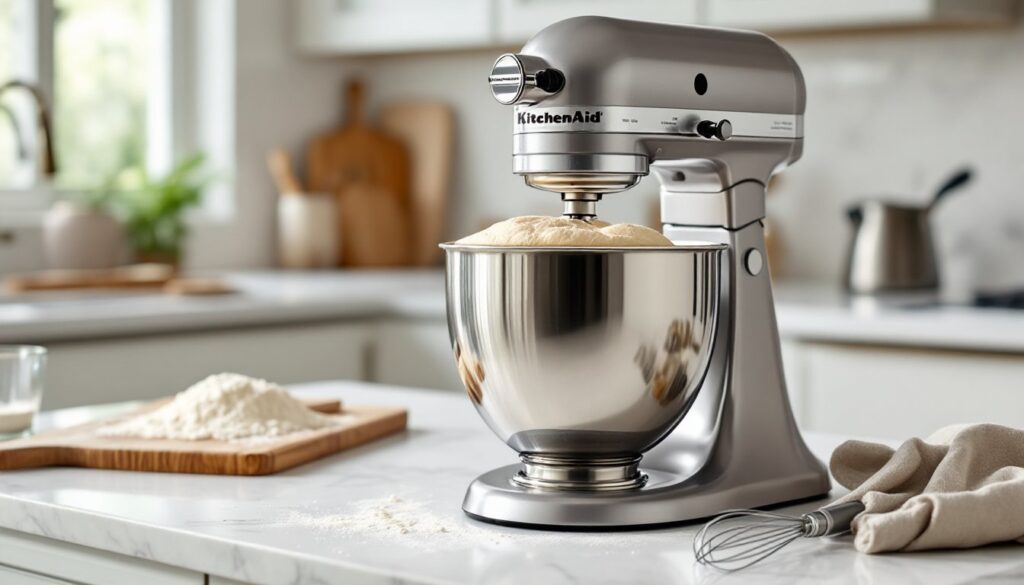
ToggleIf there’s one kitchen appliance that separates casual bakers from serious home enthusiasts, it’s a stand mixer. And in that category, the KitchenAid Professional 600 Series has held its ground as a workhorse that belongs in any kitchen tackling bread doughs, meringues, or large-batch cookie recipes. With a 6-quart stainless steel bowl and a 575-watt motor, this mixer doesn’t mess around. But is it the right choice for every home baker, or does its power and size tip it into overkill territory? This guide breaks down what the Professional 600 brings to the counter and whether it deserves a spot in your kitchen.
Key Takeaways
- The KitchenAid Professional 600 Series features a 575-watt motor and 6-quart stainless steel bowl, making it ideal for serious home bakers who regularly work with heavy doughs, large batches, and bread baking projects.
- Its bowl-lift mechanism and all-metal construction provide superior stability and durability compared to tilt-head models, with proven longevity backed by KitchenAid’s one-year warranty and decades of parts availability.
- The power hub accepts over 15 optional attachments including pasta rollers and meat grinders, transforming the mixer into a multi-tool appliance that can replace several kitchen devices and save cabinet space.
- The Professional 600 delivers consistent torque across all ten speeds without bogging down, making it superior to underpowered competitors when handling stiff doughs or back-to-back mixing sessions.
- Basic maintenance like greasing gears every 2–3 years, checking beater clearance, and hand-washing attachments ensures decades of reliable performance and protects your investment.
- Casual bakers making monthly cookie batches may find the Professional 600 overkill; the Artisan or Classic Plus models are better suited for lighter home baking needs and tighter budgets.
What Makes the KitchenAid Professional 600 Stand Out?
The Professional 600 isn’t trying to be cute or compact, it’s built for volume and endurance. The most obvious difference from lighter-duty mixers is the bowl-lift mechanism instead of a tilt-head design. That means the bowl locks into place and raises up into the beater, rather than tilting back. It’s a sturdier setup, especially when handling heavy dough or batters that would strain a smaller model.
The 575-watt DC motor delivers consistent torque at all ten speeds, which matters when you’re working with thick bread dough or whipping six egg whites at once. Unlike some stand mixers that bog down under load, the Professional 600 maintains speed without groaning or walking across the counter. That motor is also designed to run cooler and quieter than older AC models, though it’s still louder than, say, a blender on low.
Another standout: the all-metal construction. The gears, body, and planetary mixing action (where the beater rotates around the bowl while spinning on its own axis) are built to last decades, not just a few holiday cookie seasons. KitchenAid backs this with a one-year hassle-free replacement warranty and customer service that’s been around long enough to have replacement parts on hand for mixers from the 1990s.
Key Features and Specifications
Power and Bowl Capacity
The 575-watt motor gives the Professional 600 enough muscle to handle up to 14 cups of flour in a single batch, ideal for double or triple recipes. That translates to roughly 8 loaves of bread dough or 13 dozen cookies at once, which is overkill for someone making a single batch of brownies but a game-changer for anyone meal-prepping, baking for events, or running a small cottage food business.
The 6-quart polished stainless steel bowl comes with a comfortable handle and is dishwasher-safe. It’s noticeably larger than the 5-quart bowls on the Artisan series, and that extra quart makes a real difference when mixing rises or adding ingredients mid-process without overflow.
Bowl-lift models like the 600 sit lower and more stable than tilt-heads, which matters on narrow counters or under low-hanging cabinets. The footprint is roughly 14.6 inches high, 11.3 inches wide, and 14.3 inches deep, and it weighs about 29 pounds, not something you’ll be moving in and out of a cabinet daily.
Attachments and Versatility
Out of the box, the Professional 600 includes three essential attachments: a flat beater (for general mixing), a wire whip (for aerating), and a dough hook (for kneading). All three are dishwasher-safe and coated to prevent scratching the bowl.
What sets KitchenAid apart from competitors is the power hub on the front of the mixer, which accepts over 15 optional attachments, pasta rollers, meat grinders, spiralizers, food processors, and even a grain mill. That hub is the same across most KitchenAid stand mixer models, so attachments are interchangeable. If the mixer becomes a long-term fixture, those add-ons can replace several other appliances and free up cabinet space.
The 10-speed slide control gives precise increments, from a slow stir (Speed 1) that won’t fling flour out of the bowl, up to a fast whip (Speed 10) for stiff peaks or emulsions. There’s also a soft-start feature that gradually ramps up to the selected speed, reducing splatter and motor strain.
Who Should Buy the Professional 600?
This mixer makes the most sense for frequent bakers who regularly work with heavy doughs, large batches, or multiple recipes in one session. If bread baking, bagels, pizza dough, or dense batters are weekly occurrences, the 600’s motor and capacity will pay off.
It’s also a solid choice for anyone interested in the attachment ecosystem. Home cooks who want to make fresh pasta, grind meat, or slice vegetables will get more use out of the power hub than someone who only needs to whip cream occasionally. Many kitchens centered around home organization and meal prep benefit from consolidating multiple tools into one durable appliance.
On the flip side, casual bakers making a batch of cookies once a month might find the Professional 600 to be more mixer than necessary. The bowl-lift design also requires both hands to remove the bowl, which can be awkward if counter space is tight or if the user has limited grip strength. For lighter tasks, a tilt-head model like the Artisan or Classic might be a better fit.
Anyone running a cottage food operation or baking for farmers markets will appreciate the capacity and durability, though commercial licensing would require a true commercial-grade mixer with NSF certification. The Professional 600 sits in a sweet spot between home use and light commercial work.
Professional 600 vs. Other KitchenAid Models
KitchenAid’s lineup can be confusing, so here’s how the Professional 600 stacks up against other popular models.
Professional 600 vs. Artisan (5-quart): The Artisan uses a tilt-head design, which is easier for adding ingredients mid-mix and swapping attachments. It has a smaller 325-watt motor and 5-quart bowl, making it better suited for typical home baking. The Artisan comes in more color options and costs less, but it will struggle with stiff doughs or back-to-back batches. If appearance matters and volume doesn’t, the Artisan wins. If power and capacity are priorities, the 600 is the better buy.
Professional 600 vs. Pro Line (7-quart): The Pro Line Series bumps up to a 7-quart bowl and 1.3-horsepower motor, aimed at near-commercial use. It’s significantly heavier, more expensive, and overkill for most home kitchens. Unless baking is a daily income source, the extra capacity and power aren’t necessary.
Professional 600 vs. Classic Plus (4.5-quart): The Classic Plus is the entry-level tilt-head model with a 275-watt motor and 4.5-quart bowl. It’s lighter, cheaper, and fine for light mixing, but it’s not built for heavy doughs or longevity under frequent use. Testing by Good Housekeeping consistently shows that underpowered mixers bog down with dense batters, making the 600 a smarter long-term investment for serious bakers.
Professional 600 vs. Competitors (Cuisinart, Breville): Other brands offer bowl-lift mixers in the same price range, but KitchenAid’s attachment compatibility and parts availability give it an edge. Cuisinart’s 7-quart model has more capacity for less money, but replacement parts are harder to find and the motor longevity isn’t as proven. Breville mixers look sleek and have smart features, but they’re not as repairable and lack the same accessory ecosystem.
Maintenance Tips to Keep Your Mixer Running Smoothly
A well-maintained Professional 600 will outlast most kitchen appliances, but it does need occasional attention.
Grease the gears every 2-3 years if the mixer is used heavily (weekly or more). The planetary gear assembly uses food-grade grease, and KitchenAid sells a service kit with instructions. It’s a 30-minute job with a screwdriver and a clean workspace. If the mixer starts making grinding noises or the beater wobbles, it’s likely due for fresh grease.
Check beater-to-bowl clearance periodically. The flat beater should nearly touch the bottom of the bowl without scraping. If there’s too much gap, ingredients won’t mix evenly. Adjust the clearance with the screw on the motor housing, turn it clockwise (right) to lower the beater, counterclockwise (left) to raise it. This is especially important after moving the mixer or if the bowl is new.
Hand-wash attachments when possible. While they’re dishwasher-safe, the high heat and detergent can dull the finish over time. Warm soapy water and a sponge keep them looking new longer.
Wipe down the motor housing with a damp cloth after each use. Flour, sugar, and splatters can gum up the speed control or bowl-lift lever if left to accumulate. Avoid spraying cleaner directly on the mixer, mist it onto a cloth first to prevent liquid from seeping into the motor.
Store it on the counter if space allows. Frequent moving increases wear on the power cord and base, and the mixer is heavy enough that lifting it in and out of a cabinet risks dropping it. If countertop space is limited, consider solutions like a mixer lift shelf or a dedicated appliance garage, commonly featured in kitchen organization guides.
Replace worn attachments promptly. A beater with chipped coating or a dough hook with bent tines won’t mix evenly and can damage the bowl. KitchenAid sells genuine replacement parts, and third-party options are available but vary in quality.
The Professional 600 isn’t a set-it-and-forget-it appliance, but the maintenance it requires is straightforward and infrequent. Treat it like a good cast-iron skillet, a little care goes a long way, and it’ll reward decades of use.