Table of Contents
ToggleBuilding a home theater isn’t just about the screen and sound system, the seating can make or break the entire experience. Whether you’re retrofitting a basement or converting a spare bedroom, choosing the right home theater seats means balancing comfort, layout constraints, and budget. Dedicated theater home seating transforms a simple TV room into an immersive entertainment space, but picking the wrong seats leaves you with backaches and buyer’s remorse. This guide walks through the core decisions: seat types, must-have features, layout planning, and where to spend versus where to save on home theater seats for sale.
Key Takeaways
- Home theater seats directly impact comfort and viewing experience by providing proper ergonomic support, optimal viewing geometry, and acoustic benefits that standard living room furniture cannot match.
- Power recliners ($800–$2,000 per seat) offer convenience and smooth adjustment, while manual recliners ($400–$900) provide reliable functionality at lower cost, with zero-clearance models ideal for tight spaces.
- Mid-range home theater seats ($700–$1,500 per seat) deliver the best balance of comfort, features like USB ports and adjustable headrests, and durability for most home theater builds.
- Proper layout planning requires measuring viewing distance (1.5 times screen width minimum), maintaining 36–42 inches between rows for legroom, and leaving 6–10 inches of side clearance for safe exit.
- Performance fabrics offer a practical alternative to leather, resisting stains and staying cooler while costing less, and investing in frame quality and foam density ensures long-term comfort over flashy features.
- Delivery and white-glove installation ($150–$400) is worth the cost given that individual seats weigh 80–150 pounds and improper assembly can damage floors or create safety issues.
Why Home Theater Seating Matters More Than You Think
Standard living room furniture wasn’t designed for two-hour movie marathons. A typical sofa lacks lumbar support for prolonged viewing, sits too high or low for optimal screen angles, and doesn’t accommodate the cup holders, tray tables, or reclining positions that elevate home viewing.
Proper in home theater seating addresses three critical factors: viewing geometry, ergonomic support, and room acoustics. Seats positioned at the correct distance and height relative to screen size reduce eye strain and neck fatigue. Most theater seats include high backs that support the head and neck during recline, unlike low-backed couches.
Acoustically, theater seats with dense foam and upholstered backs absorb sound reflections better than hard-backed furniture, reducing echo in small rooms. This matters especially in untreated basement theaters where concrete walls amplify harsh frequencies.
From a practical standpoint, dedicated movie theater seating for home includes built-in storage, power outlets for device charging, and water-resistant upholstery that handles spills better than your average sectional. If you’re investing in a projector, screen, and surround sound, skimping on seating undermines that investment.
Types of Home Theater Seats to Consider
Recliners and Power Recliners
Manual recliners use a lever or pull mechanism to adjust the backrest and footrest. They’re reliable, require no electrical hookup, and cost less than motorized versions. Expect to pay $400–$900 per seat for mid-grade models with bonded leather or high-quality fabric upholstery.
Power recliners operate via electric motors, often with USB charging ports and programmable memory positions. They recline smoothly at the press of a button and accommodate users who have difficulty operating manual levers. Budget $800–$2,000 per seat. Installation requires access to 120V outlets, plan for in-wall wiring or surface-mount power strips behind the seating row. Some models include adjustable headrests, heated seats, and massage functions.
Both styles typically come in singles, loveseats (two-seaters), or sets of three or four. For tight spaces, zero-clearance (wall-hugger) recliners need only 3–4 inches of wall clearance, versus the 12–18 inches standard recliners require when fully extended.
Sectionals and Modular Seating
Sectionals offer flexible configurations, L-shapes, U-shapes, or straight rows, and work well in multipurpose rooms that double as playrooms or guest spaces. Theater-grade sectionals include features like cup holders, storage consoles, and removable armrests. They’re typically upholstered in durable fabric or faux leather.
Modular seating includes individual seats, wedge corners, and consoles that lock together. This approach lets you reconfigure the layout as needs change or room dimensions shift. Modular systems usually ship in pieces, making them easier to maneuver through narrow stairwells or basement doorways than a single large sectional.
Sectionals generally cost $1,200–$4,000 for a three- to five-seat configuration. They’re ideal if you want a casual vibe or need to accommodate varied group sizes. But, they lack the individual recline control and ergonomic tuning of dedicated recliners. When shopping for budget-friendly home theater builds, sectionals can deliver more seating per dollar, though comfort may be a step down from purpose-built theater seats.
Key Features to Look for in Home Theater Seats
Cup holders and storage consoles are baseline. Look for models with removable, dishwasher-safe cup holder inserts, spilled soda is inevitable. Storage consoles between seats should accommodate remotes, glasses, and snacks without intruding on armrest space.
Upholstery material affects durability and maintenance. Bonded leather is budget-friendly but peels after 3–5 years of heavy use. Top-grain leather resists wear and cleans easily but costs significantly more. Performance fabrics (polyester blends treated for stain resistance) strike a balance, durable, easy to clean, and cooler to the touch than leather in warm climates.
Seat dimensions matter for comfort. Standard theater seat width is 20–22 inches: wider seats (23–26 inches) accommodate larger frames or those who prefer extra room. Seat depth should be 20–22 inches from the backrest to the front edge, with adjustable lumbar support for varied body types.
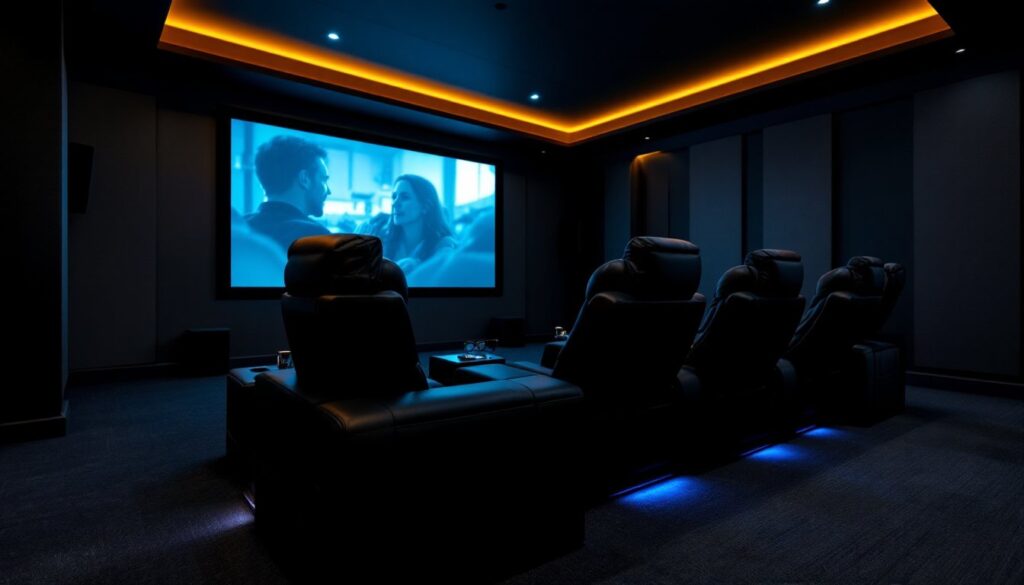
Tray tables and tablet holders are useful for gaming, working, or eating meals. Swivel trays that fold out from armrests provide a stable surface without requiring a separate end table. Some premium models include wireless charging pads and LED ambient lighting under the seats, useful for navigating dark rooms without disrupting the movie.
Reclining range varies. Basic recliners offer two or three fixed positions: premium models provide infinite adjustment from upright (110°) to nearly flat (170°). For all-day viewing or overnight guests, a deeper recline is worth the upgrade. Smart home integrations from connected device providers can link power recliners to voice assistants, letting you adjust seating with a command.
How to Measure and Plan Your Theater Seating Layout
Start with screen size and viewing distance. For a 100-inch diagonal screen, the optimal viewing distance is 10–13 feet for 1080p content, or 8–10 feet for 4K. Front-row seats should sit no closer than 1.5 times the screen width to avoid neck strain.
Row spacing (the distance between seat rows) needs to be 36–42 inches for comfortable legroom and walkway access. If you’re installing risers for a second row, ensure at least 12 inches of vertical rise per row so heads in the back row clear heads in the front. Most residential theater risers use 2×10 or 2×12 framing with ¾-inch plywood decking, but consult local building codes, some jurisdictions require railings for risers over 30 inches high.
Side clearance: Leave 6–10 inches between the outermost seat and the side wall for comfortable entry and exit. If your seats recline, confirm that the footrest won’t collide with the wall or furniture when extended.
Door swing and egress: Building codes (IRC) typically require 36-inch-wide doorways and clear egress paths. Don’t block doors with reclined seats or position rows so close together that exiting in an emergency becomes difficult.
Draw a scaled floor plan (¼ inch = 1 foot works well) on graph paper or use free online room planners. Mark wall studs, outlets, HVAC vents, and light switches. Cut paper templates matching your seat footprints (measure actual width and depth with recline extended) and arrange them on the plan. This reveals tight spots before you commit to a purchase.
For home movie theater seating with power recliners, plan electrical runs during framing or use in-floor or in-wall wire channels to hide cords. Surface-mounted power strips work but look unfinished. If you’re running new circuits, include dedicated 20-amp lines for motorized seats and equipment racks.
Budget-Friendly vs. Premium: What’s Worth the Investment?
Budget tier ($300–$700 per seat): Expect manual recline, bonded leather or basic fabric, and minimal features. These seats work fine for occasional use or kids’ playrooms but may lack the lumbar support and padding density for marathon viewing. Assembly is usually required. Frames are often hardwood with lower-grade foam (1.8–2.0 lb density), which compresses faster than premium foam.
Mid-range ($700–$1,500 per seat): This range delivers power recline, USB ports, better upholstery (top-grain leather or performance fabric), and thicker padding (2.2–2.5 lb foam density). Frames use hardwood or steel reinforcement. Many include adjustable headrests and lumbar support. Warranties extend to 3–5 years on frames and 1–2 years on motors. For most home theater builders, this tier offers the best balance of comfort, features, and longevity.
Premium tier ($1,500–$4,000+ per seat): These are the movie theater seats for home you’ll find in high-end custom installations. Features include heated seats, massage, infinite recline positions, ambient lighting, wireless charging, and memory foam or gel-infused cushions. Frames use kiln-dried hardwood and steel, upholstery is genuine top-grain or full-grain leather, and warranties cover 10+ years on frames. Some models include motorized articulating headrests and bass shakers (transducers that vibrate with low-frequency effects).
Where to save: Skip heated seats and massage unless you’ll use them regularly. Manual recline works fine if you don’t mind the lever. Fabric upholstery in performance-grade polyester costs less than leather and holds up well with proper care.
Where to invest: Spend more on frame quality and foam density, these determine how long the seat remains comfortable. Power recline is worth it if multiple users have different preferences or mobility concerns. Prioritize seats that fit your room dimensions without forcing compromises on row spacing or walkways. Reviews from home tech experts often highlight durability and long-term comfort, which matter more than flashy extras.
Used and clearance options: Home theater seats for sale appear regularly on Craigslist, Facebook Marketplace, and liquidation sites. Inspect frames for cracks, test all recline mechanisms, and check upholstery for tears or odors. Used leather seats can be reconditioned: damaged motors or frames are harder to fix. Clearance sales at furniture retailers (often in January and July) can cut 30–50% off new inventory.
Finally, factor in delivery and installation costs. Theater seats are heavy, individual recliners weigh 80–150 pounds, and multi-seat rows can exceed 400 pounds. White-glove delivery (includes setup and box removal) adds $150–$400 but saves your back and ensures proper assembly. If you’re doing it yourself, recruit help and rent a furniture dolly to avoid damaging floors or doorframes.