Table of Contents
ToggleChoosing a KitchenAid stand mixer isn’t like picking a hand mixer off the shelf. These machines are investments that’ll sit on your counter for decades, so getting the right one matters. The problem? KitchenAid offers over a dozen models with confusing overlap in features, capacity, and price. A homeowner kneading bread dough twice a month has different needs than someone mixing triple batches of cookies weekly. This comparison breaks down the core differences between KitchenAid’s main lineup, Classic, Artisan, and Professional series, so you can match a mixer to your actual kitchen workload without overpaying for features you won’t use.
Key Takeaways
- KitchenAid mixer comparison shows three main categories—tilt-head (Classic and Artisan) for home kitchens and bowl-lift (Professional series) for heavier tasks—each designed for different baking frequencies and batch sizes.
- The Artisan model offers the best value for weekly bakers, stepping up from the Classic with a 5-quart bowl, 325-watt motor, and direct-drive transmission for only $100–$150 more, making it ideal for bread and enriched doughs.
- A KitchenAid mixer’s safe working capacity is roughly 60–70% of its bowl size, so the Classic handles about six cups of flour while the Artisan manages eight cups—choose based on typical batch sizes rather than occasional doubling.
- Motor wattage alone doesn’t determine performance; transmission type (coil-spring vs. direct-drive gears) and planetary mixing action matter more, with all-metal gear models requiring fewer repairs over a 10–15 year lifespan.
- The Professional series makes sense only if you regularly mix large batches or dense doughs twice weekly, as the added weight and counter space aren’t justified for occasional bakers or smaller households.
- All KitchenAid mixers share the same power hub attachment system, so pasta rollers and food grinders work across models, but prioritize a quality mixer body first since it lasts decades while accessories can be added over time.
Understanding the KitchenAid Mixer Lineup
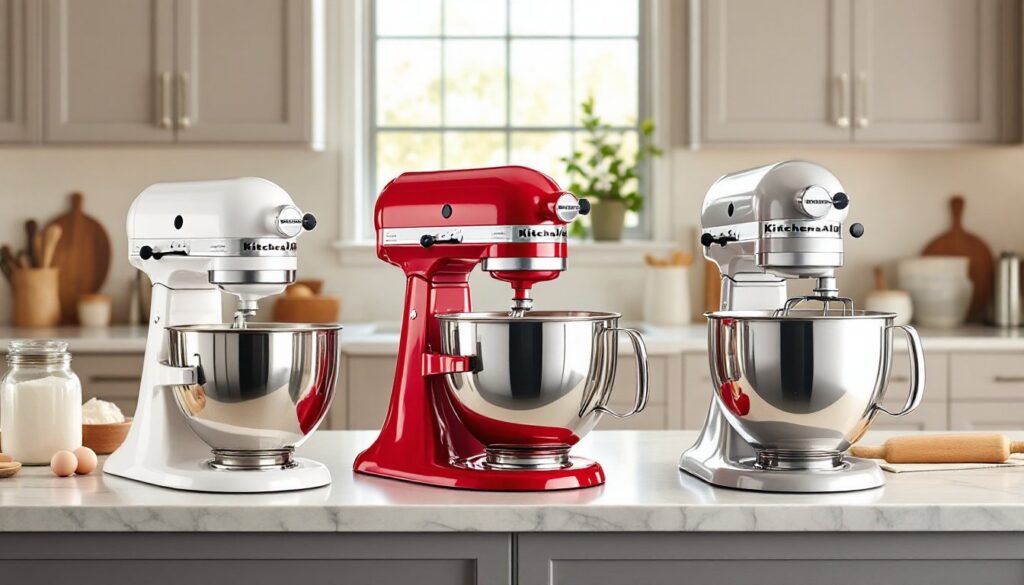
KitchenAid segments its stand mixers into three broad categories: tilt-head models for home kitchens, bowl-lift designs for heavier tasks, and commercial-grade units most homeowners will never need.
The tilt-head series, which includes the Classic and Artisan, uses a hinge mechanism that tilts the motor housing back to access the bowl. It’s intuitive, compact, and handles most home baking without issue. The trade-off is a slightly smaller maximum capacity and less torque for dense doughs.
Bowl-lift models, found in the Professional line, use levers to raise and lower a stationary bowl. This design offers more stability under load and accommodates larger batch sizes. The motor sits lower, which can make the unit feel more planted on the counter during heavy mixing.
All KitchenAid mixers share the same power hub attachment system, so any compatible accessory (pasta roller, meat grinder, food processor) fits any model. That’s a major advantage over standalone appliances cluttering your cabinet.
As of 2026, KitchenAid has also introduced minor updates to motor efficiency and planetary mixing action (the way the beater rotates around the bowl), but the core architecture remains consistent across generations. If you’re buying used or refurbished, a five-year-old Artisan functions nearly identically to a new one.
Classic vs. Artisan: Comparing the Most Popular Models
These two tilt-head mixers account for the bulk of KitchenAid’s home sales, and for good reason: both handle everyday baking without drama. The differences are subtle but meaningful.
The Classic (Model K45SS) ships with a 4.5-quart stainless steel bowl, a 250-watt motor, and a coil-spring mixing mechanism. It’s the entry point, lighter, less expensive, and perfectly adequate for cookies, quick breads, and mashed potatoes. The coil spring transfers motor power to the beater, which means slightly less durability under continuous heavy use but fewer issues for typical home loads.
The Artisan (Model KSM150/KSM156) steps up to a 5-quart bowl, a 325-watt motor, and a direct-drive transmission (all-metal gears instead of a coil). It’s about three pounds heavier, which helps stability when whipping meringue or kneading enriched dough. The larger bowl matters if you’re making anything over a single batch, think two loaves of bread instead of one.
Both models come with the same three core attachments: a flat beater, wire whip, and dough hook. According to testing by appliance labs, the Artisan’s extra wattage shows up most noticeably in dense cookie doughs and bagel recipes, where the Classic can bog down slightly.
Color options lean heavily Artisan, over 40 finishes versus the Classic’s handful of basics. If matching your countertop aesthetic matters, that’s a factor.
For most homeowners, the Artisan is worth the upcharge (typically $100–$150 more) if you bake weekly or work with stiffer doughs. If you’re mixing pancake batter and occasional cakes, the Classic does the job and frees up budget for attachments.
Professional Series vs. Home Models: What Sets Them Apart
The Professional series (Pro 5 Plus, Pro 600, Pro 6500) shifts to a bowl-lift design and targets users who mix large batches or heavy doughs regularly. These aren’t commercial units, but they close the gap between home and light professional use.
Key differences include motor wattage, the Pro 600 runs a 575-watt motor, more than double the Classic’s output, and bowl capacity, ranging from 5 to 6 quarts. The bowl-lift mechanism uses a sturdy lever to raise the bowl into the beater, which eliminates the wobble you sometimes get with tilt-heads when mixing stiff dough.
The all-metal gear train in Professional models handles sustained mixing better than tilt-head transmissions. If you’re making bread dough for a family of six twice a week, or mixing fondant for decorated cakes, the Pro series won’t protest.
Trade-offs? These mixers are noticeably larger and heavier, the Pro 600 weighs around 29 pounds versus the Artisan’s 22. Storage under a cabinet becomes awkward, and countertop real estate is a factor in smaller kitchens. Some users also find the bowl-lift mechanism less intuitive than the tilt-head’s one-handed operation.
For homeowners, the Professional series makes sense if you’re regularly scaling recipes or working with dense, low-hydration doughs (bagels, pasta, stiff cookie dough). Otherwise, the added power sits idle, and you’re paying for capacity you won’t use.
Bowl Size and Capacity Considerations
Bowl capacity directly affects batch size, but manufacturers measure it differently than most recipes call for. A 5-quart bowl doesn’t mean you can mix five quarts of dough, it’s the total volume, and safe working capacity is roughly 60–70% of that.
The Classic’s 4.5-quart bowl handles up to about six cups of flour in bread dough or two dozen cookies. That’s plenty for a typical family recipe but tight if you’re doubling batches or baking for gatherings.
The Artisan’s 5-quart bowl pushes that to roughly eight cups of flour, which translates to two standard loaves of bread or three dozen cookies in a single mix.
Professional models with 6-quart bowls accommodate up to ten cups of flour, which is overkill for most home kitchens but valuable if you meal-prep in bulk or bake for events.
Bowl material is consistent across models, brushed stainless steel, though some Artisan bundles include a glass bowl with measurement markings. Glass looks sharp but adds weight and isn’t dishwasher-safe in all configurations. Stainless is more durable and easier to clean.
One practical tip: if you’re mixing small batches in a large bowl, ingredients can ride up the sides and miss the beater. A smaller bowl accessory (sold separately) solves this, or you can simply halve recipes less often by choosing the right capacity upfront.
Motor Power and Performance Differences
Motor wattage is the spec most shoppers fixate on, but it’s not the whole story. Wattage measures power consumption, not necessarily mixing performance, gear ratios, transmission type, and motor cooling all affect how a mixer handles real-world loads.
The Classic’s 250-watt motor with coil-spring transmission works fine for batters, whipped cream, and light doughs. It’ll knead a single loaf of whole wheat bread, but you might notice the motor straining slightly on the second loaf.
The Artisan’s 325-watt motor with direct-drive gears delivers smoother, more consistent torque. It’s the sweet spot for home bakers who knead yeast doughs, make pasta, or mix stiff frostings regularly. The all-metal gears also mean fewer service calls over the mixer’s lifespan.
Professional models with 575-watt motors handle continuous mixing without heat buildup. That’s critical for tasks like kneading multiple batches back-to-back or running the pasta roller attachment for extended periods. The added power also reduces mixing time, which matters when working with temperature-sensitive ingredients like butter or chocolate.
KitchenAid mixers use planetary mixing action, the beater rotates around the bowl while also spinning on its own axis. This covers more surface area than a simple spin and reduces the need to scrape down the bowl. All models share this design, so the difference is how much resistance the motor can push through.
If you’re only mixing once or twice a week, the Classic’s motor is adequate. Weekly bread bakers or frequent cookie makers will appreciate the Artisan’s extra headroom. The Professional series is for those who treat their mixer like a workhorse, not a weekend tool.
Price Points and Value for Homeowners
As of early 2026, street prices vary by retailer and seasonal sales, but typical ranges are:
- Classic: $280–$350
- Artisan: $380–$480
- Professional 5 Plus: $450–$550
- Professional 600: $480–$600
Prices fluctuate around Black Friday, wedding registry season, and back-to-school promotions. Refurbished units (often from the KitchenAid factory outlet) run 20–30% less and carry a one-year warranty.
Value isn’t just about upfront cost, it’s durability, repair availability, and whether the mixer matches your usage. A Classic that sits mostly idle is better value than a Pro 600 used twice a month. Conversely, an Artisan that handles weekly bread and cookie batches for five years justifies the $100 premium over the Classic.
KitchenAid mixers are repairable, which matters for long-term value. Parts are widely available, and many metro areas have authorized service centers. The all-metal gear models (Artisan and Professional) tend to need fewer repairs over a 10–15 year lifespan.
Accessories add hidden cost. The pasta roller, spiralizer, and food grinder attachments each run $80–$200. Many enthusiasts find that kitchen resources like The Kitchn help them prioritize which add-ons actually get used versus collecting dust.
If budget is tight, buy the best motor and transmission you can afford, then add attachments over time. A well-chosen mixer body lasts decades: accessories can wait.
Conclusion
The right KitchenAid mixer depends on how often you bake, what you make, and how much counter space you’re willing to surrender. For occasional bakers, the Classic covers the basics without waste. Weekly bakers and bread enthusiasts benefit from the Artisan’s extra capacity and torque. The Professional series suits high-volume users or those who’ve outgrown smaller models. Match the tool to your actual workload, not an idealized version of yourself, and you’ll get decades of reliable service.