Table of Contents
ToggleKitchen islands have evolved far beyond static workstations. Homeowners with limited square footage now face a choice: dedicate space to a breakfast table or invest in more prep area. The extendable kitchen island solves that dilemma by combining both functions in one footprint. With hidden leaves, sliding panels, or flip-up extensions, these hybrid designs let homeowners host dinner parties without permanently sacrificing valuable floor space. Whether retrofitting an existing island or building from scratch, understanding the mechanics, materials, and measurements ensures the extension actually fits the kitchen, and the workflow.
Key Takeaways
- A kitchen island with extendable table combines prep workspace and dining in one unit, using mechanisms like drop-leaf hinges, slide-out panels, or flip-up extensions to save floor space without sacrificing functionality.
- Extendable kitchen islands cost 20–40% more than fixed designs but provide cost efficiency compared to buying separate island and dining furniture, plus appeal to homebuyers seeking smart space optimization.
- Proper planning requires measuring clearances (42–48 inches from perimeter counters), ensuring 36 inches of chair pull-out space behind diners, and sketching the footprint with painter’s tape before installation.
- Popular materials range from solid hardwood ($8–$15 per board foot) to quartz and composite surfaces; choose based on load capacity, kitchen style, and durability needs—quartz requires heavy-duty slides rated for 150+ pounds.
- DIY installation works for drop-leaf retrofits and slide-out extensions with standard hardware, but hiring professionals is essential for electrical, plumbing, gas lines, or stone tops over 100 pounds.
- Maintenance extends performance through regular hardware lubrication every six months, immediate spill cleanup, finish touch-ups, and annual fastener inspections to prevent the extension mechanism from becoming loose or binding.
What Is a Kitchen Island with Extendable Table?
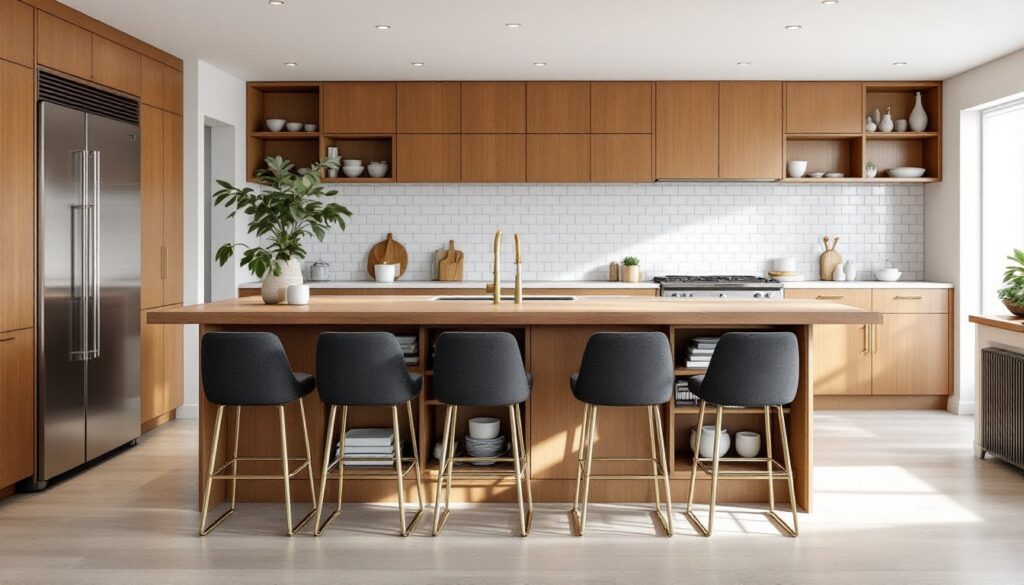
An extendable kitchen island is a stationary base unit equipped with a retractable or deployable table surface. Unlike rolling carts or freestanding tables, the extension mechanism is integrated into the island’s structure, typically via drop-leaf hinges, butterfly-leaf storage, or slide-out panels.
The core island provides standard functions: cabinets, drawers, countertop workspace, and often electrical outlets or plumbing for a sink. The extendable portion adds dining or buffet space when needed, then folds, slides, or tucks away to restore the original footprint.
Common mechanisms include:
- Drop-leaf: Hinged boards on one or both sides, supported by swing-out brackets or legs
- Slide-out: A platform that glides on drawer slides or linear ball-bearing rails, often with a self-storing leaf
- Flip-up: A panel that rotates upward and locks horizontal, doubling surface area
Each style requires different clearances and structural support. Drop-leaf designs need space for the leaf to swing down without hitting cabinetry or appliances. Slide-out models demand depth, expect at least 18 inches of table extension plus clearance behind for the mechanism.
Key Benefits of Adding an Extendable Table to Your Kitchen Island
Flexible square footage: A 4×6-foot island can expand to 4×8 feet for meals, then shrink for daily cooking traffic. That elasticity matters in galley kitchens or open-concept layouts where furniture can’t block walkways.
Cost efficiency: Building one combined unit costs less than purchasing a separate island and dining table. Materials consolidate: you’re framing one structure instead of two. If hiring a carpenter, labor hours drop.
Workflow continuity: Prep-to-plate distance shrinks when the dining surface is part of the island. No ferrying dishes across the room. The extension also serves as overflow workspace during holiday cooking or canning sessions.
Resale appeal: Multifunctional built-ins signal thoughtful design. Buyers value space optimization, especially in homes under 1,800 square feet where every piece of furniture must justify its footprint.
Temporary buffet or bar: Deployed extensions handle appetizer spreads, drink stations, or dessert bars without dragging in folding tables. When the party ends, the kitchen resets to its everyday layout.
The trade-off: extendable islands cost 20–40% more than fixed designs due to hardware and joinery complexity. Hardware kits (hinges, slides, locking brackets) run $50–$200 depending on weight capacity and finish.
Popular Design Styles and Materials for Extendable Kitchen Islands
Farmhouse: Reclaimed barn wood or knotty pine bases with butcher-block extensions. Visible iron strap hinges and turnbuckle supports lean into the rustic aesthetic. Pair with shiplap sides or apron-front sinks.
Modern minimalist: Waterfall-edge quartz or sintered stone tops with concealed European hinges. The extension often hides beneath the overhang, deployed via push-to-open mechanisms. Clean lines, no hardware in sight.
Industrial: Powder-coated steel frames with concrete composite or bamboo plywood tops. Gas-spring lifts for flip-up leaves create a mechanical, loft-style vibe. Exposed fasteners and conduit-style legs.
Traditional: Maple or cherry cabinets with granite or marble tops. Drop-leaf extensions supported by turned legs that fold under when not in use. Often includes bead-board paneling and crown molding.
Wood vs. Composite Materials
Solid hardwood (oak, maple, walnut) handles wear and can be refinished. Expect $8–$15 per board foot for kiln-dried lumber. Butcher-block tops weigh roughly 6 pounds per square foot at 1.5-inch thickness, so support brackets must handle that load plus dinnerware.
Plywood with veneer costs less ($50–$90 per 4×8 sheet for cabinet-grade) and resists warping better than solid wood in humid kitchens. Edge-band with iron-on veneer tape or hardwood strips to hide plies.
Composite materials (MDF, particleboard) work for painted finishes but sag under heavy loads. If using composites for an extension, limit spans to 24 inches unsupported or add a center brace.
Laminate or HPL (high-pressure laminate) offers durability at $30–$60 per sheet. Brands like Formica and Wilsonart provide hundreds of patterns. Laminate won’t scorch like wood, but scratches can’t be sanded out.
Quartz and solid surface: Heavy (roughly 18–25 pounds per square foot at 3 cm thickness) and expensive ($50–$120 per square foot installed), but nearly indestructible. Quartz extensions require steel-reinforced slides rated for 150+ pounds. Solid-surface materials like Corian can be thermoformed for seamless edges.
How to Choose the Right Size and Configuration for Your Space
Measure the kitchen work triangle first: The island shouldn’t block the path between sink, stove, and refrigerator. The International Residential Code (IRC) recommends at least 42 inches of clearance between the island and perimeter counters for single-cook households, 48 inches for multi-cook traffic.
With the extension deployed, maintain at least 36 inches behind each seated diner for chair pull-out. That means a 24-inch-deep extension adds 60 inches (24 + 36) to the island’s effective footprint when in use.
Standard dimensions:
- Island base height: 36 inches (counter height) or 42 inches (bar height)
- Seated dining clearance: 24 inches of table width per person, 15 inches deep minimum for place settings
- Overhang for knee room: 12–15 inches if using stools, 18 inches for chairs
For a four-person extension, plan 48 inches of linear table space (two seats per side) or a 36×48-inch surface if seating all four on one side.
Load capacity: Most residential drawer slides handle 75–100 pounds. If the extension will support a stone top or multiple diners leaning elbows, upgrade to heavy-duty ball-bearing slides rated for 150+ pounds. Woodworking project plans often detail slide specifications for various materials.
Electrical and plumbing considerations: If the island includes a cooktop, dishwasher, or outlets, the extension must not interfere with NEC (National Electrical Code) clearances. Gas lines and electrical boxes require shut-off access and can’t be blocked by deployed leaves.
Sketch the island footprint on the floor with painter’s tape, both collapsed and extended, before committing to dimensions. Walk the space for a week. If the tape gets in the way during normal cooking, the real island will too.
Installation Tips: DIY vs. Professional Setup
DIY-friendly scenarios:
- Retrofitting a drop-leaf to a freestanding island (no plumbing or wiring)
- Building from scratch using pocket-hole joinery and pre-fab cabinets
- Installing slide-out extensions with off-the-shelf hardware kits
Tools required: Miter saw or circular saw, drill/driver, Forstner bits for hinge mortises, carpenter’s square, spirit level, clamps, and a stud finder (if anchoring to the floor).
Step-by-step for a drop-leaf install:
- Cut the leaf: Use 3/4-inch plywood or edge-glued hardwood. Sand edges smooth and apply edge-banding.
- Mortise the hinges: Piano hinges (continuous) or table hinges work best. Mortise the hinge barrel flush with the island edge so the leaf sits level when raised.
- Install support brackets: Swing-out brackets or folding legs must lock securely. Test load capacity with sandbags before use.
- Finish: Apply polyurethane (3 coats, sanding between) or hard-wax oil for food-safe protection.
Many step-by-step DIY project tutorials include downloadable cut lists and hardware specs for common extension styles.
When to hire a pro:
- Installing a gas line or 120V/240V electrical for appliances (requires licensed electrician/plumber in most jurisdictions)
- Anchoring to a concrete slab (need hammer drill, tapcon screws, precise leveling)
- Working with stone tops over 100 pounds (risk of cracking during installation)
- Structural modifications to existing cabinetry or load-bearing walls
Permits typically aren’t required for freestanding furniture, but building permits may apply if you’re running new electrical, plumbing, or gas lines. Check local codes.
Cost estimates (2026 rates, U.S. averages):
- DIY materials (cabinet-grade plywood, hardware, finish): $300–$800
- Pre-fab extendable island (unassembled): $600–$1,800
- Custom carpenter-built: $2,000–$6,000+ depending on size, materials, and finishes
- Professional installation (if purchasing pre-built): $200–$500 labor
Prices vary by region and material grade. Exotic hardwoods, live-edge slabs, or engineered stone will push costs higher.
Maintenance and Care for Long-Lasting Performance
Wood surfaces: Wipe spills immediately, standing water causes swelling and finish failure. Reapply food-safe mineral oil every 3–4 months for butcher-block tops. Scratches in polyurethane can be spot-repaired with 400-grit sandpaper and a fresh topcoat.
Laminate and composite: Use non-abrasive cleaners. Avoid scouring pads that scratch the surface. Heat damage (from hot pans) won’t sand out: use trivets.
Stone tops: Seal granite and marble annually with penetrating sealer to prevent staining. Quartz doesn’t need sealing but can discolor if exposed to harsh chemicals (bleach, paint remover).
Hardware lubrication: Every six months, apply silicone spray or dry PTFE lubricant to drawer slides, hinges, and locking mechanisms. Avoid WD-40 (attracts dust and gums up over time). If slides bind, check for debris in the track or bent rails.
Locking mechanisms: Drop-leaf brackets and flip-up latches wear out with repeated use. Inspect for loose screws or bent arms annually. Replacement brackets cost $10–$30 per set and swap out with a screwdriver.
Leveling: Floors settle. If the island wobbles or the extension doesn’t sit flush, adjust leveling feet or add shims under the base. Use a 48-inch level to check both axes.
Finish touch-ups: Keep leftover paint or stain for repairs. Minor dings in wood can be filled with color-matched wood filler or wax sticks. Sand smooth, feather the edges, and topcoat.
Safety: Tighten all fasteners (screws, bolts, brackets) every 12 months. Loose hardware can cause the extension to collapse under load. If the island includes a butcher-block surface used for cutting, periodically sand and re-oil to prevent bacterial buildup in knife grooves.