Table of Contents
ToggleTall indoor plants do more than fill empty corners, they define a room’s vertical space, soften hard architectural lines, and bring a sense of scale that no throw pillow can match. Whether you’re working with a dim hallway or a sun-drenched living room, the right tall plant anchors your design and improves air quality without the fuss of a full garden. This guide cuts through the noise, covering which species thrive in specific light conditions, how to keep them alive without turning your home into a nursery, and what to watch for as you build height into your indoor landscape.
Key Takeaways
- Tall indoor plants define vertical space and improve air quality while anchoring your design without cluttering countertops or requiring permanent changes.
- Low-light tolerant species like dracaena, snake plant, and ZZ plant thrive in spaces 6+ feet from windows and need only ambient light to survive.
- Bright-light tall indoor plants like fiddle-leaf figs and rubber plants develop vibrant foliage and faster growth but require consistent watering and rotation to prevent lopsided development.
- Overwatering is the leading killer of tall plants—check soil moisture 2-3 inches deep before watering, use pots with drainage holes, and let soil dry between waterings.
- Pruning in early spring above leaf nodes encourages bushier growth, while dusting leaves every 2-4 weeks removes debris that blocks light absorption and slows photosynthesis.
- Match tall plants to your room’s actual light conditions rather than what you wish for, and repot every 2-3 years using fresh potting mix to prevent root rot.
Why Choose Tall Indoor Plants for Your Space
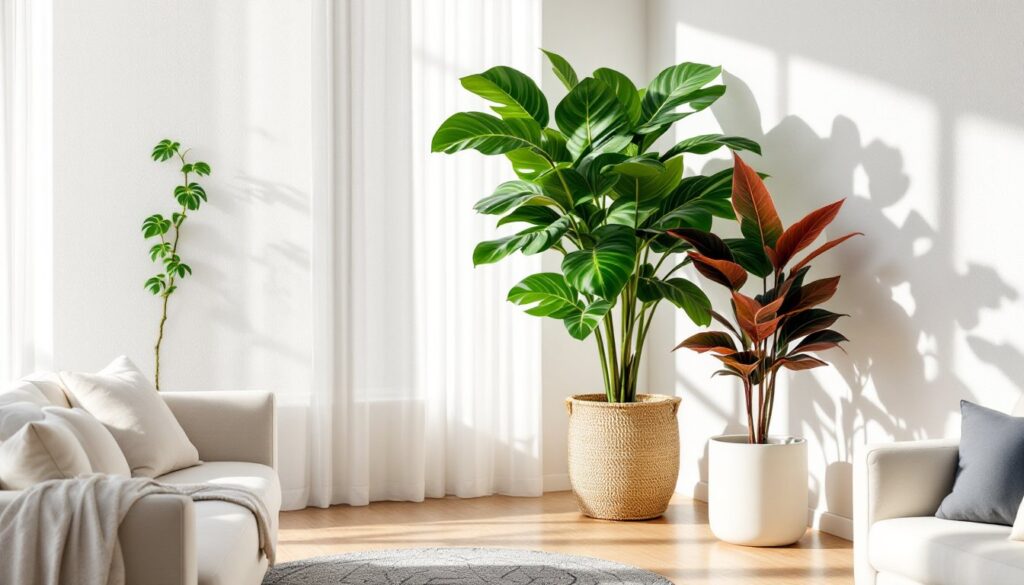
Tall plants, typically anything over 4 feet when mature, serve functional and aesthetic roles that smaller specimens can’t replicate. They draw the eye upward, making standard 8-foot ceilings feel taller and breaking up visual monotony in open-plan layouts. In rooms with high ceilings, they prevent the space from feeling cavernous or underutilized.
From a practical standpoint, larger plants have more leaf surface area, which translates to better air filtration. Species like rubber trees and fiddle-leaf figs process volatile organic compounds more efficiently than desktop succulents. They also act as natural privacy screens in front of windows or between functional zones in a studio apartment.
Tall plants require floor space, not shelf real estate, which frees up horizontal surfaces for other uses. A single 10- to 12-inch diameter pot can anchor a corner or flank a fireplace without cluttering countertops. For renters or anyone avoiding permanent changes, they’re fully reversible design elements, no drywall patching required.
One honest caveat: tall plants need room to grow and can be awkward to move once established. If you’re rearranging furniture quarterly or dealing with narrow doorways, consider the mature spread and whether you can rotate or prune the plant without professional help.
Best Tall Indoor Plants for Low Light Conditions
Low light doesn’t mean no light, it refers to spaces more than 6 feet from a window, north-facing rooms, or areas that get mostly indirect or artificial illumination. These plants tolerate those conditions but won’t thrive in a windowless basement without supplemental grow lights.
Dracaena marginata (dragon tree) tops the list for forgiving care. It reaches 6 to 8 feet indoors, has slender, spiky foliage, and tolerates irregular watering. The canes are often sold in staggered heights, giving instant architectural interest. Let the top 2 inches of soil dry between waterings.
Snake plant (Sansevieria trifasciata) grows upright to 4 feet or taller depending on the cultivar. It’s nearly indestructible, handling low light and sporadic neglect. The stiff, sword-shaped leaves don’t droop or yellow easily, and it’s one of the few houseplants that releases oxygen at night.
ZZ plant (Zamioculcas zamiifolia) thrives on neglect. Glossy, waxy leaves emerge from thick rhizomes that store water, so you can stretch watering intervals to 2 to 3 weeks. It grows slowly to about 3 to 4 feet, making it ideal for corners that don’t get much attention.
Parlor palm (Chamaedorea elegans) brings a tropical feel without the humidity demands of larger palms. It stays compact at 4 to 6 feet and adapts to low light, though growth will slow. Keep soil lightly moist and rinse leaves monthly to remove dust that blocks light absorption.
For rooms with high ceilings, many designers recommend taller palms and ferns to balance vertical space. Avoid placing any of these in completely dark zones, they still need ambient light to photosynthesize.
Top Tall Indoor Plants for Bright, Sunny Rooms
Bright, sunny rooms offer 4 to 6 hours of direct or strong indirect light daily, typically south- or west-facing windows. These plants reward that light with faster growth and more vibrant foliage, but they also need consistent watering since sunlight accelerates evaporation.
Fiddle-leaf fig (Ficus lyrata) is the statement plant of the decade. It grows 6 to 10 feet indoors with large, violin-shaped leaves that demand attention. Place it in bright, indirect light, direct afternoon sun can scorch leaves. Rotate the pot 90 degrees every week to prevent lopsided growth, and water when the top 1 to 2 inches of soil are dry. It’s fussy about relocation, so pick a spot and commit.
Rubber plant (Ficus elastica) is less temperamental than its fiddle-leaf cousin. It tolerates a range of light conditions but colors up best in bright spots. Varieties like ‘Burgundy’ develop deep red-black leaves in strong light. Wipe leaves with a damp cloth monthly to keep pores clear and maintain that glossy finish.
Bird of paradise (Strelitzia reginae) brings bold, banana-like leaves and can hit 5 to 7 feet indoors. It craves sunlight and won’t flower without several hours of direct exposure. Expect slower growth in winter: it’s normal for older leaves to yellow and drop. Use a pot with drainage holes and a well-draining mix, root rot is common in soggy soil.
Yucca (Yucca elephantipes) looks like a desert transplant with its woody trunk and spiky rosette of leaves. It’s drought-tolerant once established and thrives in full sun. Water deeply but infrequently, letting soil dry completely between sessions. It’s a good pick if you travel often or forget to water.
Monstera deliciosa isn’t a true tree, but it climbs and sprawls to 8 feet or more with support. Those iconic split leaves develop best in bright, indirect light. Provide a moss pole or trellis to encourage upward growth and prevent it from sprawling across the floor. Consistent moisture and humidity keep edges from browning.
Essential Care Tips for Keeping Tall Plants Healthy
Watering and Humidity Requirements
Tall plants in large pots hold more soil, which retains moisture longer than small containers. Overwatering is the leading killer, stick your finger 2 to 3 ings into the soil before watering. If it’s damp, wait. Most tropicals prefer a dry-down cycle rather than constant wetness.
Drainage is non-negotiable. Use pots with holes and a saucer underneath, and empty the saucer 15 to 20 minutes after watering so roots aren’t sitting in standing water. If you’re using a decorative cachepot without drainage, lift the grow pot out to water, let it drain fully, then return it.
Humidity matters more for tropical species like bird of paradise and monstera. If leaf edges brown or curl, the air is too dry. Group plants together to create a microclimate, run a humidifier, or place pots on trays filled with pebbles and water (pot bottom above water line). Misting is mostly cosmetic, it doesn’t raise humidity long enough to help.
Water quality can cause issues over time. If you see white crust on soil or pot rims, salts from tap water are building up. Flush pots with distilled or rainwater every few months, or let tap water sit 24 hours before use to off-gas chlorine.
Pruning and Maintenance Best Practices
Pruning controls height, encourages bushier growth, and removes dead or damaged tissue. Use clean, sharp bypass pruners or shears, don’t tear or crush stems. For most species, prune in early spring before the growing season kicks in.
On plants like dracaena or rubber trees, cut just above a node (the bump where leaves emerge) to encourage branching. Remove no more than 20 to 25 percent of foliage at once to avoid stressing the plant. Leggy growth usually signals insufficient light: moving the plant is a better fix than constant trimming.
Dust and debris block light and clog leaf pores, slowing photosynthesis. Wipe large leaves with a damp microfiber cloth every 2 to 4 weeks. For plants with many small leaves, a lukewarm shower works, just let them drain fully before returning to their spot.
Repotting becomes necessary when roots circle the drainage hole or push through the soil surface. Most tall plants need repotting every 2 to 3 years. Go up only 1 to 2 inches in pot diameter, oversized pots hold excess moisture and increase root rot risk. Use fresh potting mix: garden soil is too dense and retains too much water.
Staking or support keeps tall, top-heavy plants upright. For single-trunk specimens like yucca, a bamboo stake and soft ties work. Climbing plants need moss poles, trellises, or wall-mounted supports. Secure ties loosely to allow for stem expansion.
Pest watch: Tall plants near windows attract spider mites, scale, and mealybugs. Inspect leaf undersides and stem joints monthly. Isolate any infested plant immediately and treat with insecticidal soap or neem oil, following label directions. Wear gloves and work in a ventilated area when applying treatments.
Fertilizing tall plants depends on growth rate and light exposure. Use a balanced, water-soluble fertilizer diluted to half strength every 4 to 6 weeks during spring and summer. Skip fertilizing in fall and winter unless the plant is actively growing under grow lights. Overfertilizing causes salt buildup and tip burn, less is more.
Conclusion
Choosing the right tall plant comes down to matching light conditions, committing to consistent care, and being realistic about space. Start with one specimen suited to your room’s actual light, not what you wish it had, and build from there. Tall plants aren’t impulse buys, but they deliver presence and function that smaller greenery can’t replicate.