Table of Contents
ToggleA worn-out shower with cracked tiles, moldy grout, and outdated fixtures can drag down an entire bathroom. Remodeling a shower isn’t just about aesthetics, it’s about improving functionality, preventing water damage, and adding value to a home. The good news? This project is within reach for experienced DIYers willing to tackle plumbing, waterproofing, and tile work. That said, shower remodels demand precision. Poor waterproofing or improper slope on the shower pan can lead to costly leaks and structural damage. Before tearing out that first tile, homeowners need to understand what’s involved, from permits and budgeting to demolition and installation.
Key Takeaways
- Proper planning before demolition—including assessing water damage, choosing materials, and obtaining permits—prevents budget overruns and structural problems during your shower remodel.
- DIY shower remodels typically cost $1,500–$5,000 in materials and take 4–7 days of active work, with 2–3 weeks total timeline when accounting for mortar and grout cure times.
- Waterproofing quality is critical to success; liquid or sheet membranes must cover all wet areas, walls, and seams to prevent invisible leaks and costly damage.
- When installing a shower base, proper slope (1/4″ per foot toward the drain) and a waterproof backer board with sealed seams are essential to avoid drainage failures.
- Choose between prefabricated bases for easy installation, tile-ready foam pans for moderate difficulty, or mortar-bed pans for maximum durability before beginning your shower remodel project.
- Always test the drain with water overnight and use 100% silicone caulk (not latex) along all joints and corners to resist mold and maintain flexibility long-term.
Planning Your Shower Remodel
Jumping straight into demo without a clear plan is a recipe for budget overruns and frustration. Start by deciding on the scope: is this a simple fixture swap and re-tile, or a full gut-and-rebuild? Full remodels that move plumbing lines or expand the footprint require permits in most jurisdictions and may need a licensed plumber.
Assess the existing setup. Check for water damage behind walls, soft spots on the floor, or signs of mold. If the subfloor is compromised, it’ll need replacement before any new materials go in. Ignoring hidden damage now means tearing out brand-new tile later.
Choose materials early. Shower pans come in several formats: prefabricated fiberglass or acrylic bases (easiest install, moderate cost), tile-ready foam pans (lightweight, requires mortar bed and waterproofing membrane), and traditional mortar-bed pans (most durable, steepest learning curve). Wall options include tile over cement board or foam backer, acrylic or fiberglass surrounds (budget-friendly, fast install), and solid surface panels (mid-range, low maintenance).
Don’t forget ventilation. Building codes typically require either a window or an exhaust fan rated for the bathroom’s square footage. Mold thrives in poorly ventilated showers.
Setting a Budget and Timeline
A DIY shower remodel typically costs $1,500 to $5,000 depending on materials, with tile and custom glass doors pushing the high end. Labor can double that if hiring pros. Budget for the unexpected, rotted studs, outdated plumbing that doesn’t meet code, or surprise asbestos in older homes.
Material costs breakdown:
- Prefab shower base: $200–$800
- Tile (12″ × 24″ porcelain): $3–$12 per sq. ft.
- Cement board (3′ × 5′ sheets): $10–$15 each
- Waterproofing membrane: $50–$150 per roll
- Shower valve and trim kit: $150–$600
- Glass door: $400–$1,200
Timeline-wise, plan for 4 to 7 days of active work for a competent DIYer, stretched over 2–3 weeks to account for mortar and grout cure times. Rushing tile or waterproofing is asking for leaks.
Removing the Old Shower
Demo is dusty, loud, and physically demanding. Wear safety goggles, gloves, a dust mask (N95 minimum), and hearing protection. Turn off water to the shower at the fixture shutoffs or main line.
Removal steps:
-
Pull the shower door or curtain. Unscrew tracks and remove the door. For glass enclosures, get help, tempered glass is heavy and awkward.
-
Remove fixtures. Unscrew the showerhead, tub spout (if present), and trim escutcheons. Most valves stay in the wall unless replacing the rough-in.
-
Demo the walls. Tile comes off with a flat pry bar and hammer. Work from top to bottom in small sections. If the walls are fiberglass or acrylic, cut panels into manageable pieces with a reciprocating saw. Watch for hidden plumbing and electrical lines.
-
Pull the backer material. Cement board and old greenboard drywall usually come off in chunks. Expect nails or screws every 8 inches into studs.
-
Remove the old pan. Fiberglass pans may be one piece or multiple. Cut with a reciprocating saw if needed. Mortar pans require a sledgehammer and serious effort. Protect the drain assembly, it may be reusable.
-
Inspect framing. Check studs for rot, especially around the valve and at the base. Replace any compromised lumber with pressure-treated or framing-grade material. Now’s also the time to address outdated plumbing: older galvanized or polybutylene should be swapped for PEX or copper.
Haul debris in contractor bags or rent a small dumpster. Tile and cement board are heavy, most municipalities won’t take construction waste in regular trash.
Installing the New Shower Base and Walls
This is where precision matters. A shower that doesn’t drain properly or lacks proper waterproofing will fail, often invisibly, until significant damage is done.
Install the shower base:
-
Level the subfloor. The pan needs solid, flat support. Patch low spots with thinset or self-leveling compound. For mortar-bed pans, slope the pre-pitch layer toward the drain at 1/4″ per foot.
-
Set the drain assembly. Follow manufacturer instructions, most involve solvent-welding a PVC drain to the waste line, then securing a two-part compression drain. Test-fit the pan before committing.
-
Dry-fit the base. Prefab pans should sit flush against studs with no gaps. Some need mortar underneath for support: others rest directly on the subfloor.
-
Secure and seal. Screw flanges to studs per instructions (usually every 6–8 inches). Seal the joint between pan and wall with 100% silicone or pan-specific sealant. When installing custom shower pans, homeowners need to verify proper slope before waterproofing to avoid drainage problems.
-
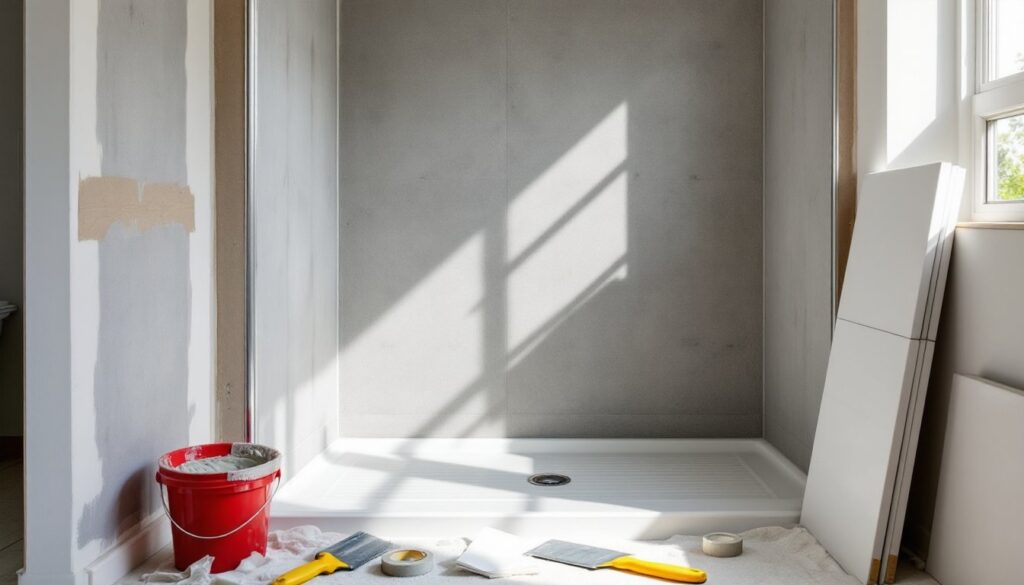
Test the drain. Plug it, fill the base with a few inches of water, and let it sit overnight. No leaks? Move on.
Install backer board and waterproofing:
-
Cut and hang cement board. Standard thickness is 1/2″ for walls. Fasten with cement board screws every 8″ into studs. Joints should fall on stud centers when possible. Leave a 1/4″ gap between the board and the shower pan.
-
Tape seams. Use fiberglass mesh tape and thinset over all seams and screw heads. Reinforced corners (inside and outside) get special attention.
-
Apply waterproofing membrane. Options include liquid-applied membranes (roll or brush on, cure 24–48 hours) or sheet membranes like Schluter Kerdi or RedGard fabric. Cover the entire wet area, walls, curb, and the seam where walls meet the base. Most home improvement projects succeed or fail based on waterproofing quality, especially in wet environments like showers.
-
Install tile. Start with layout, dry-lay tiles to avoid awkward cuts at eye level. Mix thinset to the consistency of peanut butter. Spread with a notched trowel (1/4″ × 3/8″ notches for wall tile, larger for floors). Press tiles firmly, using spacers for consistent grout lines. Work in small sections (3–4 sq. ft.) so thinset doesn’t skin over.
-
Grout and seal. Wait 24–72 hours for thinset to cure. Mix unsanded grout for wall joints under 1/8″, sanded for wider. Pack grout with a rubber float at a 45° angle, then wipe diagonally with a damp sponge. After 72 hours, apply penetrating grout sealer.
Cut tile with a wet saw for clean edges. A snap cutter works for straight cuts on ceramic, but porcelain demands a diamond blade.
Adding Fixtures, Doors, and Finishing Touches
With walls and base complete, it’s time for the visible hardware that makes the shower functional.
Install the shower valve and trim:
-
Rough-in valve first. If replacing the old valve, this should’ve happened during framing. Valves need to sit at the correct depth, flush with the finished wall surface. Most pressure-balance or thermostatic valves have adjustable depth adapters.
-
Attach trim. Slide the escutcheon over the valve stem, then thread on the handle or lever. Don’t overtighten, brass fittings crack easily. Seal the escutcheon to the tile with a bead of silicone.
-
Install showerhead and arm. Wrap threads with 3–4 wraps of Teflon tape (wrap clockwise, viewed from the end). Hand-tighten, then snug with a wrench, about a quarter turn past hand-tight.
Hang the shower door or curtain:
Glass doors add a polished look but cost more. Frameless doors ($400–$1,200) mount directly to tile with heavy-duty clips and need precise measurements. Framed or semi-frameless doors ($200–$600) use metal channels for support and are more forgiving. For a DIY shower remodel, choosing between framed and frameless doors often comes down to budget and installation confidence.
Measure the opening three times, at top, middle, and bottom, to account for walls that aren’t perfectly plumb. Order doors 1/4″ narrower than the smallest measurement. Most kits include a header rail, side jambs, and bottom sweep.
Curtain rods are simpler: tension rods work for alcoves, while curved rods need wall anchors into studs.
Seal and caulk:
Run a bead of 100% silicone caulk (not acrylic latex) along all corners, the base-to-wall joint, around the drain, and fixture escutcheons. Smooth with a wet finger or caulk tool. Silicone resists mold better than latex and stays flexible.
Finishing details:
- Install a grab bar if needed. Mount into studs or use blocking installed during framing. Suction-cup bars aren’t code-compliant for accessibility.
- Add a recessed niche or corner shelf for shampoo and soap during the tile phase, retrofitting later is a headache.
- Test everything. Run the shower for 10 minutes and check for leaks at the drain, valve, and wall joints. Inspect the ceiling below (if applicable) for water stains.
Conclusion
A shower remodel is one of the more involved DIY projects, but the payoff, a watertight, stylish, functional space, makes the effort worthwhile. Success hinges on methodical planning, proper waterproofing, and not rushing cure times. For homeowners comfortable with tile work and basic plumbing, this is absolutely doable over a few weekends. Those unsure about valve rough-ins or structural issues should consult a plumber or contractor before going too far down the demo path.