Table of Contents
ToggleUpgrading to an extra large refrigerator isn’t about luxury, it’s about ending the Tetris game every time you unload groceries. If you’re juggling bulk shopping runs, meal prep marathons, or a household that treats the fridge like a convenience store, standard capacity models don’t cut it. But sizing up comes with real trade-offs: footprint, energy draw, installation headaches, and price tags that climb fast. This guide walks through what actually qualifies as “extra large,” who benefits most, and how to match capacity, layout, and efficiency to your kitchen without turning a smart upgrade into an expensive mistake.
Key Takeaways
- Extra large refrigerators start at 25 cubic feet and suit households of five or more, bulk shoppers, meal preppers, and frequent entertainers who need to consolidate grocery trips and reduce food waste.
- An extra large refrigerator’s actual usable storage is typically 2-4 cubic feet less than advertised capacity due to fixed components like ice makers and door bins, so prioritize adjustable shelving and full-width drawers for flexibility.
- ENERGY STAR certified models use 9-10% less energy than standard units, with a 28-cubic-foot fridge consuming 600-750 kWh annually; upgrading from older models often pays for itself within 5-7 years through energy savings alone.
- French door models dominate the extra large category with wide shelves and freezer drawers at waist level, priced between $2,000-$4,500, offering better accessibility and organization than side-by-side configurations.
- Proper installation requires measuring door swing clearance, delivery path through narrow doorways, and ventilation space; professional installation may be necessary, especially for water line hookups ($200-$400 for plumbing).
- Skip oversized fridges if you currently manage fine with standard capacity or eat out regularly; avoid features like Wi-Fi and touch screens that rarely justify their premium cost, and focus instead on practical daily-use features like humidity-controlled drawers and efficient lighting.
What Qualifies as an Extra Large Refrigerator?
In appliance specs, extra large refrigerators start at 25 cubic feet and commonly run up to 32+ cubic feet in total capacity. For context, most standard models sit between 18–24 cubic feet, which is plenty for two to four people. Once you cross 25 cubic feet, you’re in territory designed for larger households, serious entertainers, or anyone storing a week’s worth of groceries without playing spatial Jenga.
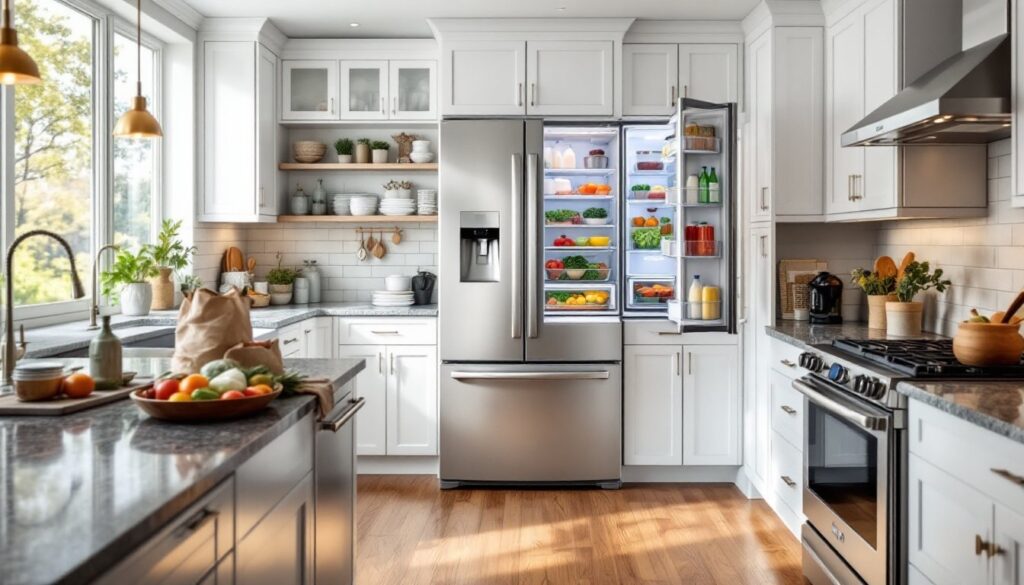
French door models dominate this size class, offering wide shelves in the fridge section (often 36 inches across) and pull-out freezer drawers below. Side-by-side configurations also hit the 25+ cubic foot mark, though their narrower compartments can make storing sheet pans or pizza boxes awkward. Four-door and column refrigerators (separate fridge and freezer units) can exceed 30 cubic feet combined, but they’re specialty builds with price points to match.
Physical dimensions matter as much as interior volume. Most extra large units measure 35–36 inches wide, 68–72 inches tall, and 34–36 inches deep (excluding handles and hinges). Counter-depth versions trim the depth to around 30 inches for a built-in look but sacrifice a few cubic feet, an acceptable trade if you’re prioritizing kitchen flow over raw storage.
Nominal capacity numbers can mislead. Manufacturers measure total interior volume, but adjustable shelves, ice makers, and door bins eat into usable space. A 28-cubic-foot model might deliver 22–24 cubic feet of practical storage once you account for fixed components.
Who Really Needs an Extra Large Refrigerator?
Extra large refrigerators make sense for households of five or more, especially with teenagers who treat the fridge like a 24-hour cafeteria. If you’re running multiple grocery trips per week just to keep up, the jump in capacity can consolidate those runs and reduce food waste from overcrowded shelves that hide perishables until they spoil.
Bulk shoppers and meal preppers benefit most. Warehouse club hauls, flats of yogurt, family packs of chicken, gallon jugs, fit without Tetris-level shelf rearranging. Meal preppers who batch-cook proteins, portion vegetables, or store prepped ingredients across multiple containers need the vertical and horizontal real estate extra large models provide. Planning kitchen renovations around meal prep workflows often starts with refrigerator capacity.
Frequent entertainers appreciate the breathing room. Hosting holiday dinners, game day spreads, or weekend barbecues means stashing trays, pitchers, and backup ingredients that wouldn’t fit in a standard fridge. Having dedicated zones for party prep versus daily meals keeps everything accessible.
That said, a couple living alone or a household of three that eats out regularly won’t justify the footprint or energy cost. Oversized fridges in underused kitchens become expensive storage for condiments and leftovers. If you’re currently managing fine with a 20-cubic-foot model and rarely run out of room, don’t upsize just because you’re remodeling, you’ll pay for capacity you won’t use.
One practical test: open your current fridge during peak load (post-grocery run, pre-party). If you’re constantly shuffling items, stacking precariously, or leaving overflow on the counter, you’ve outgrown your capacity. If you’ve got empty shelves most days, stick with what you have.
Key Features to Look for in Extra Large Refrigerators
Storage Configuration and Interior Layout
Interior layout dictates whether 28 cubic feet feels spacious or cramped. Adjustable shelving is non-negotiable, look for spill-proof glass shelves that slide or fold to accommodate tall items like beverage dispensers or sheet cakes. Fixed shelves limit flexibility and turn ingredient storage into a puzzle.
Gallon door bins on both fridge and freezer doors keep milk, juice, and condiments accessible without hogging main shelf space. Some models include adjustable door bins that slide vertically to fit taller bottles, useful for wine, kombucha growlers, or two-liter sodas.
Deli and produce drawers with humidity controls prevent vegetables from wilting and deli meats from drying out. Full-width drawers (the kind that span the entire fridge width) work well for party trays or bulk produce. Smaller, segmented drawers suit households that separate cheeses, cold cuts, and snacks.
Freezer organization separates mediocre models from top performers. Pull-out drawers with dividers, tilt-out bins, or sliding baskets keep frozen goods visible. Deep freezer compartments without dividers become black holes where bags of peas disappear for months. Many home maintenance guides recommend quarterly freezer cleanouts to prevent frost buildup and mystery leftovers.
Ice and water dispensers add convenience but consume interior space, usually 1–2 cubic feet. If you rarely use ice, skip the dispenser and reclaim the freezer real estate. External dispensers also require a water line hookup, which isn’t always DIY-friendly: hiring a plumber adds $150–$300 to installation costs in most regions.
Energy Efficiency Considerations
Extra large refrigerators run 24/7, so efficiency matters. ENERGY STAR certification is the baseline, certified models use about 9–10% less energy than federal minimums. Over a 10-year lifespan, that translates to $200–$400 in saved electricity costs, depending on local rates.
Inverter compressors (also called variable-speed compressors) adjust cooling output based on load, running quieter and more efficiently than traditional on/off compressors. They’re standard on mid-to-high-end models and worth the upcharge if you’re planning to keep the unit for a decade or more.
Annual energy consumption appears on the yellow EnergyGuide label, listed in kilowatt-hours (kWh). A 28-cubic-foot French door fridge typically uses 600–750 kWh per year. At the national average of $0.14 per kWh, that’s $84–$105 annually. Older, non-ENERGY STAR models can hit 900+ kWh, so replacing a 15-year-old unit often pays for itself in five to seven years through energy savings alone.
Avoid placing the fridge near heat sources (ovens, dishwashers, direct sunlight) or in uninsulated garages, ambient heat forces the compressor to work harder, spiking energy use by 10–15%. Maintain at least 1 inch of clearance on sides and back for airflow: blocked vents kill efficiency and shorten compressor life.
Measuring Your Space: Installation and Clearance Requirements
Measure twice, order once. Start with the rough opening, the space between cabinets or walls where the fridge will sit. Measure width, height, and depth at the narrowest points (floors and walls aren’t always square). Add 1 inch on each side and 1–2 inches at the top for ventilation and to account for uneven walls.
Depth trips up most buyers. Standard-depth refrigerators (34–36 inches) protrude 6–8 inches past typical 24-inch-deep base cabinets. That’s fine if your kitchen layout allows it, but tight galley kitchens or U-shaped layouts can feel cramped. Counter-depth models (around 30 inches total depth) sit flush with counters but cost 15–25% more and sacrifice 2–4 cubic feet of capacity.
Don’t forget the door swing. French doors need clearance to open fully, usually 90 degrees or more. Measure from the hinge side to the nearest obstruction (island, adjacent cabinet, wall). Side-by-side models require less swing depth but need horizontal space for both doors to open simultaneously.
Delivery path matters as much as the final location. Measure doorways, hallways, and stairwells along the route. Most extra large fridges won’t fit through a standard 32-inch doorway without removing the doors (both fridge doors and sometimes the house door). Professional delivery teams do this routinely, but it’s worth confirming clearance beforehand, especially for older homes with narrow hallways or tight turns.
Check floor load capacity for upper-floor installations. A loaded 28-cubic-foot fridge weighs 400–500 pounds. Most residential floors handle this fine, but if you’re placing it over a basement or crawl space, confirm the subfloor and joists are sound. When in doubt, consult a structural engineer, it’s cheaper than repairing a sagging floor.
Finally, verify the water line location if you’re installing an ice/water dispenser. The hookup typically sits behind the fridge, requiring a ¼-inch copper or braided stainless steel line tapped into the nearest cold water supply. Running a new line through walls or floors isn’t beginner-level DIY: budget $200–$400 for a plumber unless you’re comfortable with PEX tubing and compression fittings.
Top Extra Large Refrigerator Styles for Modern Homes
French door refrigerators dominate the extra large category for good reason. Wide top shelves (often 35+ inches) fit sheet pans, party platters, and bulk items without sideways Tetris. The bottom freezer drawer keeps frozen goods at waist level, easier to access than top freezers. Most French door models in the 27–30 cubic foot range run $2,000–$4,500, with premium features like Wi-Fi connectivity, touch screens, or door-in-door access pushing prices past $5,000.
Side-by-side refrigerators offer narrow vertical compartments, convenient for tight spaces but frustrating for wide items. They’re less common in the extra large segment now, but models with 26–28 cubic feet still exist, typically priced $1,500–$3,000. Ice dispensers and water filters are easier to integrate in side-by-sides due to the vertical door layout.
Four-door and multi-zone refrigerators add a third or fourth compartment with independent temperature controls. The extra zone works as a beverage fridge, deli drawer, or flex space that switches between fridge and freezer temps. These models start around $3,500 and climb toward $7,000 for high-end brands. They’re overkill for most households but shine for serious cooks who need dedicated spaces for different food types.
Column refrigerators, separate fridge and freezer units installed side by side, offer the most capacity (30–36+ cubic feet combined) and the highest price tags ($8,000–$15,000+). They’re built-in only, requiring custom cabinetry and professional installation. Unless you’re doing a full kitchen remodel with a contractor, skip these.
Material and finish impact both aesthetics and maintenance. Stainless steel resists rust and heat but shows fingerprints. Black stainless or slate finishes hide smudges better and suit modern kitchens. Avoid glossy finishes in high-traffic kitchens, they’re magnets for handprints and require constant wiping.
For families considering refrigerator recommendations, lab-tested models often balance capacity, efficiency, and real-world usability better than flashy showroom units. Prioritize layout and energy consumption over touch screens and Wi-Fi, those features break first and rarely justify the premium.
If you’re upgrading from a 20-year-old model, almost any modern extra large refrigerator will feel like a massive improvement. Focus on the features you’ll use daily, adjustable shelves, humidity-controlled drawers, efficient lighting, and skip the gimmicks. Your grocery bill, your back, and your sanity will thank you.