Table of Contents
ToggleChoosing the right cabinets can make or break a kitchen renovation. Kitchen Craft has carved out a solid reputation in the mid-range cabinet market, offering a balance of customization, quality construction, and price that appeals to homeowners who want more than stock builder-grade boxes but aren’t ready to spring for full custom cabinetry. Whether you’re planning a complete kitchen overhaul or replacing worn-out cabinets, understanding what Kitchen Craft brings to the table, and where it fits in the broader landscape of cabinet options, will help you make a decision you won’t regret five years down the line.
Key Takeaways
- Kitchen Craft cabinets offer a smart semi-custom solution positioned between budget stock cabinets and high-cost full custom options, with pricing typically ranging from $150–$350 per linear foot.
- These cabinets stand out for superior construction quality, including 3/4-inch plywood boxes, dovetail joinery, and soft-close hardware rated for 75-100 lbs, ensuring durability for decades of daily use.
- Kitchen Craft provides extensive customization through door styles (traditional raised-panel to modern flat-slab), finish options (painted, stained, and thermofoil), and engineered organizational inserts designed seamlessly into cabinet boxes.
- Expect 6-10 week lead times with Kitchen Craft cabinets, which is manageable but can extend with specialty finishes; plan an extra 10-15% budget for contingencies and hardware upgrades.
- Installation requires attention to leveling, stud location, and proper sequencing—starting with upper cabinets first—making it a manageable DIY project for experienced homeowners but best left to professionals for pristine results.
- Proper maintenance with pH-neutral cleaners, moisture control, and prompt spill cleanup keeps Kitchen Craft cabinets looking beautiful for 15-20 years without major refinishing.
What Are Kitchen Craft Cabinets?
Kitchen Craft is a Canadian cabinet manufacturer owned by MasterBrand Cabinets, one of the largest cabinet conglomerates in North America. They operate in the semi-custom category, which sits between stock cabinets (limited sizes, pre-made) and full custom (built to exact specifications). Semi-custom means you get a wide range of door styles, finishes, and organizational add-ons, plus cabinets built to your kitchen’s dimensions, but you’re still choosing from a set catalog rather than designing from scratch.
Kitchen Craft cabinets are sold primarily through independent kitchen dealers and design showrooms, not big-box stores. This means you’ll typically work with a designer who can help you configure your layout, select finishes, and coordinate delivery. They manufacture in both Canada and the U.S., with lead times that have improved since the pandemic-era delays but still average 6-10 weeks depending on finish complexity and dealer backlog.
Their lineup includes framed and frameless construction (more on that below), with options for kitchens, baths, mudrooms, and even garages. If you’re after a cohesive look throughout your home, Kitchen Craft’s range makes that easier than mixing manufacturers.
Kitchen Craft Cabinet Styles and Design Options
Kitchen Craft offers several distinct door styles and finish families. Here’s what you’ll encounter:
Traditional styles include raised-panel doors, beaded insets, and decorative moldings, think classic Shaker variants and more ornate cathedral arches. These pair well with stained wood finishes or antique glazes.
Contemporary and transitional styles lean on flat-panel (slab) doors, minimal hardware, and cleaner lines. Kitchen Craft’s frameless (full-overlay) construction works especially well here, giving you a seamless, European-style look. Modern kitchen organization trends favor these cleaner profiles for their versatility.
Finishes span painted (whites, grays, navies, and custom color-matching), stained woods (maple, oak, cherry, hickory), and thermofoil (a vinyl wrap over MDF, budget-friendly and easy to clean). Painted finishes have become the dominant request in 2026, with soft whites and warm greiges leading the pack. Stains still hold appeal for those wanting visible wood grain and a more traditional aesthetic.
Door overlay options matter more than most DIYers realize. Full overlay (doors cover the entire face frame) gives a more modern, streamlined look. Partial overlay (traditional) leaves some of the frame visible. Inset doors (doors sit flush inside the frame) are the most labor-intensive and expensive but deliver a furniture-quality appearance.
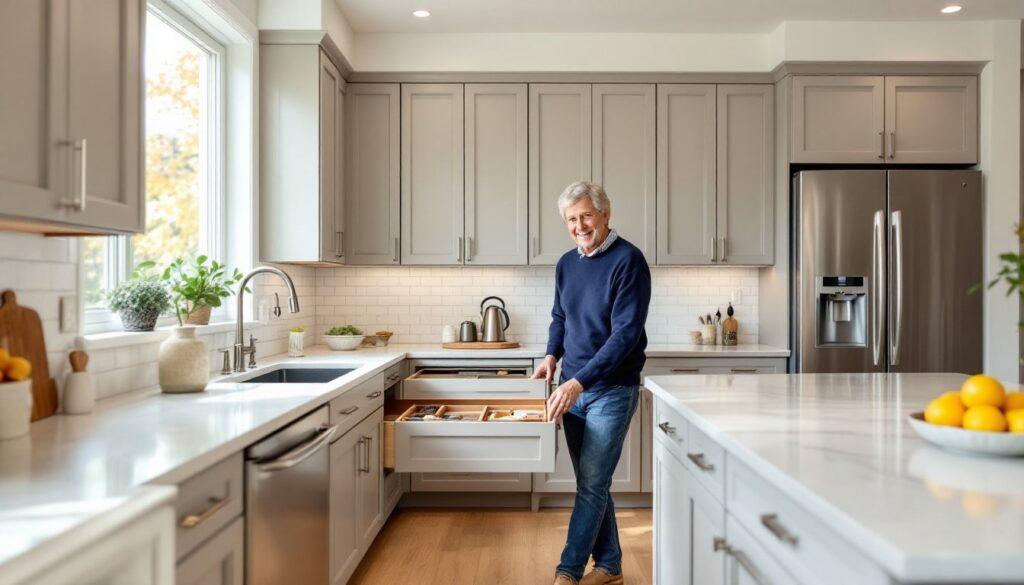
Kitchen Craft also offers specialty organizational inserts: pull-out spice racks, tray dividers, lazy Susans, soft-close drawer glides, and tip-out trays for sink fronts. These aren’t afterthoughts, they’re engineered into the cabinet box during manufacturing, so they fit cleanly and function reliably.
Quality and Construction: What Sets Kitchen Craft Apart
Construction quality is where Kitchen Craft separates itself from big-box stock cabinets. Here’s what you’re getting:
Box Construction
Cabinet boxes are built from 3/4-inch plywood or furniture-board (a dense particleboard), depending on the line you choose. Plywood is stronger, more moisture-resistant, and handles screw-holding better over time, critical if you’re mounting heavy granite or quartz countertops. Some budget lines use particleboard with a melamine coating, which is fine for dry locations but less forgiving in high-moisture environments near sinks or dishwashers.
Joinery and Assembly
Kitchen Craft uses a combination of dado joints, dowels, and mechanical fasteners rather than relying solely on staples or cam-lock hardware (common in flat-pack imports). This makes the boxes stiffer and less prone to racking (twisting) when you’re wrestling them into place during installation.
Door and Drawer Quality
Doors are typically 5-piece construction (solid wood or MDF frame with a center panel), with mortise-and-tenon or doweled joints. Drawer boxes come standard with dovetail joinery or equivalent in higher-end lines, and many include soft-close undermount glides rated for 75-100 lbs. That’s enough to handle a drawer full of cast iron without slamming or sagging.
Finish Durability
Painted finishes are catalyzed or conversion varnish over multiple coats, resistant to chipping and easier to touch up than cheaper paint-over-primer jobs. Stains are sealed with a clear topcoat for protection against spills and UV fading.
One thing to watch: Kitchen Craft’s quality can vary slightly between product lines. Their premium series (often branded under names like “Wilmington” or “Brookhaven”) use better materials and finishes than entry-level options. Ask your dealer which tier you’re speccing.
Pricing and Value: What to Expect When Budgeting
Kitchen Craft sits in the $150–$350 per linear foot range for a typical kitchen, installed. That’s a useful middle ground: you’re paying more than IKEA or Home Depot stock cabinets ($75–$150/linear foot) but far less than full custom ($500–$1,200+/linear foot). A 10×12 kitchen with standard upper and lower cabinets might run $8,000–$16,000 for the cabinets alone, depending on door style, finish, and accessories.
Pricing variables include:
- Finish complexity: Painted finishes with glazing or distressing cost more than stained or thermofoil.
- Door style: Inset and raised-panel designs are pricier than flat slabs.
- Wood species: Maple and oak are less expensive than cherry or hickory.
- Add-ons: Soft-close hinges, roll-out trays, and custom panels for appliances add up quickly.
Many homeowners find the best kitchen cabinets balance style and durability without requiring a second mortgage, which is Kitchen Craft’s sweet spot.
Delivery and lead times can affect your timeline. Confirm lead times in writing before finalizing your order, custom colors or specialty woods can push delivery from 8 to 12+ weeks. Budget an extra 10-15% for contingencies (damaged pieces, last-minute layout tweaks, or hardware upgrades).
Kitchen Craft’s warranty is typically limited lifetime on cabinet boxes and five years on finishes and moving parts. Read the fine print: water damage and installer errors aren’t covered.
Installation Tips for Kitchen Craft Cabinets
Installing Kitchen Craft cabinets is a manageable DIY project if you’ve got experience hanging cabinets, but it’s not beginner-friendly. Here’s what to expect:
Pre-Installation Prep
- Check for level and plumb. Floors are rarely level, and walls are rarely plumb. Use shims and a 4-foot or 6-foot level to establish a baseline. Mark a level reference line on the wall at 34.5 inches (standard base cabinet height before countertop).
- Locate studs. Use a stud finder and mark centerlines. Kitchen Craft cabinets should be screwed into studs with 2.5-inch cabinet screws (not drywall anchors). Studs are typically spaced 16 inches on center, but verify.
- Acclimate cabinets. Let them sit in the installation space for 24-48 hours if they’ve been in a cold truck or warehouse. Wood and MDF expand and contract with humidity.
Hanging Sequence
Start with upper cabinets before base cabinets, you’ll have more room to maneuver and won’t risk damaging installed base units. Use a ledger board (a straight 1×3 or 1×4 screwed temporarily to the wall at the cabinet bottom line) to support the weight while you fasten.
Join cabinets together with cabinet screws through the face frames (for framed cabinets) or through the sides (for frameless). Clamp them tight before drilling to avoid gaps. Minimalist cabinet designs emphasize clean alignment, so take your time here.
Base Cabinets and Leveling
Set base cabinets on shims to achieve level front-to-back and side-to-side. Once level, screw through the back rail into studs. Don’t over-tighten, you can crack MDF or particleboard if you reef on screws.
Safety and Tools
Wear safety glasses and use a drill/driver, level, stud finder, clamps, and shims. A laser level speeds up layout but isn’t required. If you’re working solo, a cabinet lift or jack makes upper installation much safer.
Permit check: Most jurisdictions don’t require permits for cabinet replacement, but if you’re moving plumbing or electrical (adding a new island, relocating a sink), you’ll need permits and inspections. Don’t skip this, failed inspections can complicate future home sales.
Maintenance and Care for Long-Lasting Beauty
Kitchen Craft cabinets will hold up well if you treat them right. Here’s how to keep them looking sharp:
Daily and Weekly Cleaning
Wipe down surfaces with a damp microfiber cloth and a pH-neutral cleaner (dish soap diluted in water works). Avoid ammonia-based cleaners, abrasive scrubbers, and anything with bleach, these can dull finishes and damage seals over time.
For greasy buildup (common near the range), use a degreaser formulated for cabinetry. Test in an inconspicuous spot first.
Preventing Damage
- Control moisture: Use exhaust fans when cooking or running the dishwasher. Wipe up spills immediately, especially around sinks.
- Avoid direct sunlight: UV exposure fades stains and can yellow painted finishes. Use window treatments if you have a lot of southern or western exposure.
- Adjust hinges and slides: Soft-close hinges and drawer glides can shift over time. Most are adjustable with a Phillips-head screwdriver, consult the manufacturer’s template or ask your dealer for adjustment instructions.
Touch-Ups and Repairs
Scratches on painted finishes can often be touched up with a small artist’s brush and matching paint (ask your dealer if they stock touch-up kits). Stained finishes are harder to repair invisibly, use a furniture marker or stain pen for minor dings.
If a hinge or glide fails, replacement parts are available through Kitchen Craft dealers or directly from the manufacturer. Keep your cabinet model and finish codes on file for easier reordering.
Long-Term Considerations
Refinishing or repainting is possible down the road, but it’s a labor-intensive job best left to professionals if you want factory-quality results. Many homeowners find that with proper care, Kitchen Craft cabinets look good for 15-20 years before needing major updates.
Conclusion
Kitchen Craft cabinets deliver solid construction, a broad range of styles, and reasonable pricing for homeowners who want more than basic stock but don’t need full custom. Whether you’re drawn to classic raised-panel doors or sleek frameless slabs, their semi-custom approach gives you flexibility without overwhelming complexity. Measure carefully, plan for lead times, and don’t skip the prep work, your cabinets will thank you with decades of reliable service.