Table of Contents
ToggleWhen planning a kitchen remodel or shopping for a new fridge, understanding refrigerator depth is critical. A unit that juts out six inches past your countertops can throw off your entire layout, block walkways, and make your kitchen feel cramped. Refrigerator depth varies widely, from sleek counter-depth models around 24–30 inches to standard-depth units that run 30–36 inches or more. The difference impacts not just aesthetics but also storage capacity, clearance requirements, and whether the doors will actually open in your space. This guide breaks down standard measurements, compares counter-depth to standard-depth models, and walks through the measuring and planning steps to ensure the fridge fits before it arrives.
Key Takeaways
- Refrigerator depth varies significantly: standard models measure 30–36 inches deep (including handles), while counter-depth units run 24–30 inches and align flush with countertops.
- Counter-depth refrigerators sacrifice 15–25% storage capacity compared to standard-depth models but offer a cleaner aesthetic and better fit in smaller kitchens, often costing $200–$800 more.
- Always measure your kitchen space in three dimensions (width, height, and depth) three times at different points, accounting for baseboards, outlets, and water lines that reduce usable space.
- Door swing clearance is critical: French-door models typically need 24 inches of clearance to open fully, while narrower side-by-side and top-freezer models work better in tight spaces.
- Refrigerators require 1 inch of clearance on each side, 1 inch on top, and 1–2 inches in the rear for proper airflow and compressor efficiency; skipping this clearance shortens appliance life and increases energy costs.
- Deeper shelves in standard-depth fridges store bulk items and full platters, while shallower counter-depth shelves (12–14 inches in crisper drawers) improve visibility and reduce food waste through better organization.
Standard Refrigerator Depth Measurements Explained
Most standard-depth refrigerators measure 30 to 36 inches deep from the back of the unit to the front of the door (excluding handles). When you add the handle, total depth can push 32 to 38 inches. That means a standard fridge typically protrudes 6 to 10 inches beyond the front edge of a standard 24-inch-deep base cabinet or 25-inch countertop.
Depth is measured in three ways, and manufacturers list all three in spec sheets:
- Cabinet depth (or case depth): The body of the fridge, usually 24–30 inches. This is the part that fits into the opening.
- Door depth: Adds another 2–4 inches depending on door style and insulation.
- Total depth with handles: The full front-to-back measurement, often 32–38 inches for standard models.
When comparing models, always check which measurement is listed. A fridge advertised as “30 inches deep” might mean cabinet depth only, tack on another 4–6 inches for doors and handles. And remember, depth is independent of width and height: a narrow 30-inch-wide fridge can still be 36 inches deep.
Building codes don’t regulate refrigerator depth, but the International Residential Code (IRC) does require minimum aisle widths in kitchens, typically 36 inches for a single-cook space and 42 inches if two cooks will pass. A fridge that sticks out too far can violate those clearances and make the kitchen feel tight.
Counter-Depth vs. Standard-Depth Refrigerators
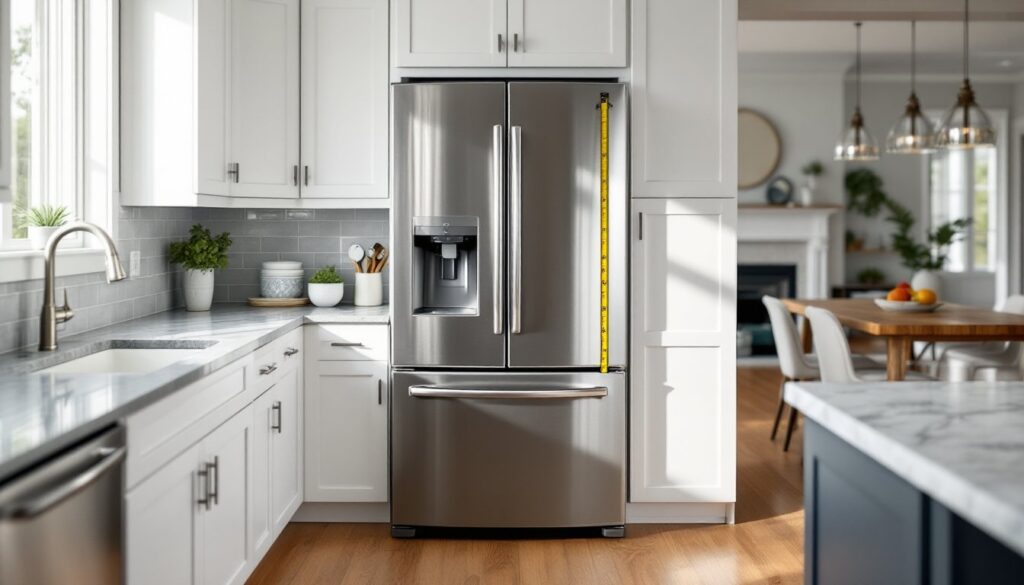
Counter-depth refrigerators are designed to align nearly flush with standard cabinetry. They measure 24 to 30 inches deep (case depth), so when installed, the door face sits roughly even with the front edge of your counters. This creates a streamlined, built-in look without custom paneling or a hefty price tag.
Standard-depth models offer more interior volume, typically 20 to 30 cubic feet versus 15 to 23 cubic feet for counter-depth units of similar width. That extra depth translates to deeper shelves, larger crisper drawers, and more door bin space. The tradeoff is the bulkier profile.
Key differences:
- Footprint: Counter-depth units won’t stick out into walkways, making them ideal for galley kitchens or open-plan layouts.
- Capacity: Standard-depth fridges hold roughly 15–25% more food.
- Price: Counter-depth models often cost $200–$800 more at the same capacity due to design and engineering.
- Access: Shallower shelves in counter-depth units make it easier to see and reach items in the back, less “lost yogurt syndrome.”
Many homeowners evaluating counter-depth refrigerators find the cleaner aesthetic worth the capacity sacrifice, especially in smaller kitchens.
Why Counter-Depth Models Are Shallower
Counter-depth fridges are engineered to match standard countertop depth, which is typically 24 inches for base cabinets plus a 1-inch overhang, 25 inches total. By keeping the cabinet depth at or under 24 inches and the door/handle assembly compact, the fridge sits flush or protrudes only 1–2 inches.
This requires design compromises: thinner insulation (which can affect energy efficiency slightly), compact compressors, and sometimes a taller profile to recover lost cubic footage. Some brands offset the capacity loss by going wider, 36-inch or 42-inch counter-depth models are common.
Counter-depth isn’t a regulated standard, so measurements vary by brand. Always check the spec sheet. Some “counter-depth” units still stick out 2–3 inches, especially French-door models with thicker insulation or ice makers in the door.
Measuring Your Kitchen Space for the Perfect Fit
Before shopping, measure the existing space three times: width, height, and depth. Use a tape measure (a 25-foot Stanley or similar works fine) and write down every dimension. Don’t rely on the old fridge’s spec sheet, actual installed dimensions can differ.
Step-by-step measuring:
- Width: Measure the opening between cabinets or walls at the top, middle, and bottom. Walls aren’t always plumb. Use the narrowest measurement.
- Height: Measure floor to the underside of any cabinet, soffit, or ceiling. If there’s a gap above the old fridge, measure to where the new one will need to clear.
- Depth: Measure from the back wall to the front edge of adjacent countertops. Note any baseboards, outlet boxes, or water lines that protrude, they’ll eat into usable depth.
Add 1 inch of clearance on each side (width) and 1 inch on top for ventilation and ease of installation. If the opening is exactly 36 inches wide, buy a fridge no wider than 35.5 inches. Many kitchen design guides emphasize this buffer to avoid costly cabinet modifications.
Check the door swing radius too. Measure how far the door(s) will open before hitting a wall, island, or adjacent cabinet. Most fridges need at least a 90-degree swing for drawer and shelf access.
Accounting for Door Swing and Ventilation Clearance
Refrigerators need airflow around the condenser coils to run efficiently. Most manufacturers call for:
- 1 inch on each side (between the fridge and cabinetry)
- 1 inch on top
- 1–2 inches in the rear (from the back wall to the coils or rear panel)
Built-in and counter-depth models with front or bottom-mounted coils may have different requirements, check the installation manual. Skimping on clearance will shorten compressor life and spike energy bills.
Door swing is non-negotiable. If a French-door model needs 24 inches of clearance to open fully and your island is 20 inches away, you’ll struggle to pull out crisper drawers. Measure from the hinge side of the fridge to the nearest obstacle. If it’s tight, consider a side-by-side or top-freezer model with narrower door panels, or re-site the fridge.
Don’t forget the water line and electrical outlet. The outlet should be accessible without moving the fridge, typically low on an adjacent wall or behind the unit within reach. Water lines for ice makers usually run through the floor or lower cabinet, make sure the new fridge’s connection point aligns.
Refrigerator Depth by Style and Configuration
Different fridge styles have different depth profiles. Here’s the breakdown:
Top-freezer models: Usually the deepest, 32–36 inches total depth including handles. They’re boxy and utilitarian but offer the most cubic feet per dollar.
Bottom-freezer models: Similar to top-freezer, 30–36 inches deep. The wider freezer drawer can add an inch or two compared to a top-mount.
Side-by-side refrigerators: Typically 32–36 inches deep. The narrow door panels swing less than French doors, which helps in tight spaces.
French-door models: Range from 29 to 36 inches depending on counter-depth vs. standard. Counter-depth French doors are popular and often measure 29–31 inches total depth, while standard versions run 33–36 inches. The double doors require more lateral clearance but less front-to-back swing.
Built-in refrigerators: Designed for flush installation with cabinetry, often 24 inches deep (case) but can be taller and wider to compensate. These are premium units, expect $5,000–$15,000. They require professional installation and sometimes custom panels.
If you’re working on a workshop or garage fridge project, keep in mind that compact and apartment-size fridges run 24–28 inches deep and can fit under counters or in tight nooks. They’re handy for secondary spaces where a full-size unit is overkill.
How Refrigerator Depth Affects Storage Capacity
Every inch of depth translates to usable volume. A standard-depth fridge with 34-inch case depth might offer 22–28 cubic feet of space, while a counter-depth model at 24 inches typically maxes out at 20–23 cubic feet in the same width and height class.
How it plays out inside:
- Shelves: Deeper shelves hold large platters, sheet pans, and bulk items. Shallower counter-depth shelves force you to stack or go vertical, which can actually improve organization and reduce forgotten leftovers.
- Crisper drawers: Standard-depth crispers are often 16–18 inches deep: counter-depth versions run 12–14 inches. That’s the difference between storing a full head of cabbage or having to chop it first.
- Door bins: Depth affects door storage less, but standard models sometimes have dual-tier door bins with more front-to-back room for condiments and gallon jugs.
For a family of four or more, standard-depth usually makes sense unless space is constrained. For couples, empty-nesters, or urban kitchens, counter-depth offers enough room without the bulk.
One often-overlooked factor: deeper fridges can hide items at the back, leading to waste. If you’re not diligent about rotating stock, shallower shelves keep everything visible and within arm’s reach. It’s a usability win even if the spec sheet shows fewer cubic feet.