Table of Contents
ToggleDealing with ants marching across your kitchen counter or spiders setting up shop in the basement? Ortho Home Defense Insect Killer for Indoor & Perimeter2 is one of the most widely used consumer pest control products on the market, and for good reason. It’s designed to create a chemical barrier that kills common household insects on contact and keeps working for months. But effective application matters, spray it wrong, and you’re wasting product and leaving gaps in your defense. This guide walks through what’s in the bottle, how it works, proper application technique for both indoor and outdoor use, and what results you can realistically expect.
Key Takeaways
- Ortho Home Defense Insect Killer for Indoor & Perimeter2 uses bifenthrin to create a lasting residual barrier that kills over 130 household insect species on contact and provides up to 12 months of outdoor protection on non-porous surfaces.
- Proper application technique—treating baseboards, door frames, foundation perimeters, and entry points with a continuous 4-inch band—is essential for maximum effectiveness and lasting results.
- Indoor protection typically lasts 3–6 months along undisturbed baseboards, while outdoor coverage requires reapplication every 3–6 months depending on climate, weather, and surface type.
- Bifenthrin is safe for residential use when applied as directed, but cats are more sensitive to pyrethroids than dogs, and the product is highly toxic to aquatic life, requiring buffer zones near water features.
- Most users see noticeable pest reduction within 24–48 hours, but severe infestations (carpenter ants in walls, German roaches in appliances) require targeted baits or professional pest control combined with habitat modification.
- Keep application logs and plan retreatment every 90–120 days to maintain consistent barrier protection without over-applying or leaving coverage gaps.
What Is Ortho Home Defense Insect Killer for Indoor & Perimeter2?
Ortho Home Defense Insect Killer for Indoor & Perimeter2 is a ready-to-use spray insecticide formulated with bifenthrin as the active ingredient. Bifenthrin is a synthetic pyrethroid that targets the nervous systems of insects, causing rapid knockdown and death. The “Indoor & Perimeter2” designation indicates it’s labeled for both interior application and outdoor perimeter treatment around the foundation of your home.
The product comes in a 1.33-gallon jug with a battery-powered wand (batteries included) that delivers a continuous spray without pumping. The wand features an extended reach and a comfort trigger, making it easier to treat baseboards, door frames, and foundation perimeters without bending or kneeling constantly.
It’s labeled to kill over 130 insect species, including ants (carpenter, pavement, and odorous house ants), roaches, spiders, centipedes, earwigs, silverfish, crickets, and ticks. The formula is non-staining on most surfaces when used as directed, though you should always test an inconspicuous area first on porous materials like untreated wood or natural stone.
Ortho claims the product provides up to 12 months of protection when applied to non-porous surfaces outdoors. Indoor protection duration is typically shorter due to cleaning and foot traffic, but you can expect several months of residual effectiveness along undisturbed baseboards and entry points.
How Ortho Home Defense Works to Eliminate Common Household Pests
Bifenthrin works by interfering with sodium channels in insect nerve cells, causing paralysis and death. When an insect contacts a treated surface, the chemical is absorbed through the exoskeleton. The effect isn’t always instant, some insects may take several minutes to an hour to die, depending on the species and level of exposure.
The spray creates a residual barrier. Once applied and dried, the bifenthrin bonds to surfaces and remains active for weeks or months. Insects that crawl across treated areas pick up the chemical on their bodies, even if they don’t die immediately in that spot. This is why treating entry points, baseboards, and the exterior perimeter is more effective than spot-spraying individual bugs.
Bifenthrin breaks down slowly indoors (protected from UV and rain), which is why Ortho advertises extended protection. Outdoors, exposure to sunlight, rain, and temperature fluctuations degrades the chemical faster, particularly on porous surfaces like bare wood or dirt. That’s why non-porous surfaces like vinyl siding, concrete foundations, and painted trim hold up better for long-term barrier treatments.
One thing bifenthrin doesn’t do well: kill insect eggs. If you’re dealing with an active infestation, especially roaches or ants, you may need multiple applications over several weeks to catch newly hatched nymphs. It’s a knockdown-and-barrier product, not a reproductive disruptor.
Step-by-Step Application Guide for Maximum Effectiveness
Proper application makes the difference between a pest-free home and wasted product. Here’s how to get the most out of each gallon.
Indoor Application Tips
-
Clear and prep the area. Move furniture away from baseboards, remove outlet covers if treating behind them, and sweep or vacuum floors to remove dust and debris. Bifenthrin needs clean contact with the surface to bond properly.
-
Shake the jug for 5-10 seconds before use. Insert batteries into the wand if it’s your first time using the product.
-
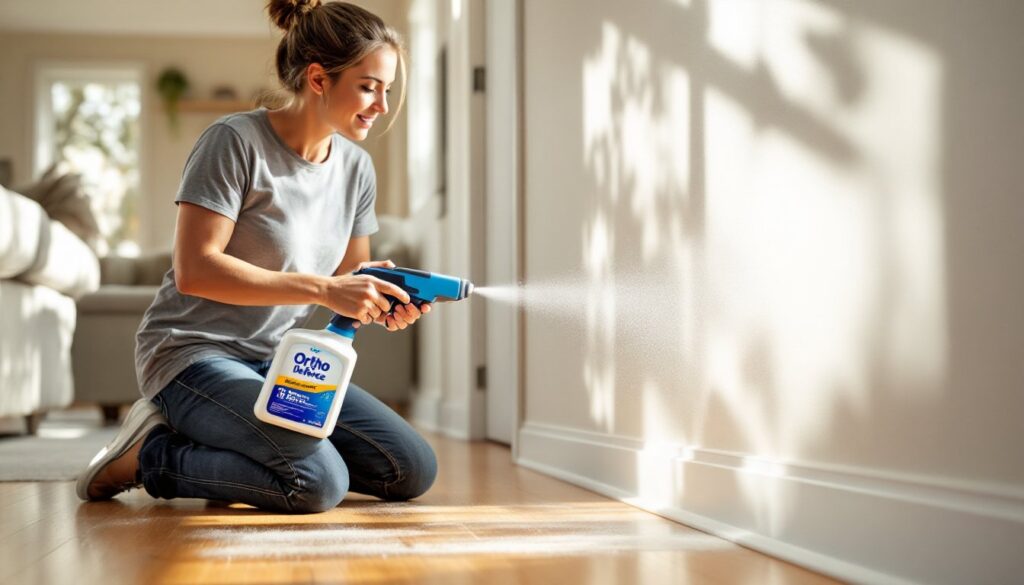
Apply a continuous 4-inch band along baseboards, door frames, window sills, and around plumbing penetrations (under sinks, behind toilets, laundry connections). Hold the wand 12 inches from the surface and move at a steady pace, about one foot per second. You want visible wetness but not puddling.
-
Target cracks and gaps. Spray into expansion joints where flooring meets walls, along the edges of cabinets, and around pipe chases. These are highways for ants and roaches.
-
Avoid spraying on surfaces where food is prepared or where children and pets have constant contact (play mats, pet bedding). The label allows application in kitchens, but keep it to baseboards and under appliances, not countertops.
-
Allow 30-60 minutes of drying time before allowing kids or pets back into treated rooms. Ventilate the space during application, open windows if weather permits.
-
Don’t mop or wipe treated baseboards for at least a week after application. Cleaning removes the residual barrier.
Perimeter Treatment Best Practices
-
Walk the foundation and identify entry points: gaps around utility lines, cracks in the foundation, weep holes in brick veneer, gaps under siding, and door thresholds.
-
Apply a 12-inch band up the foundation and 12 inches out onto the ground (or hardscape). This creates a kill zone that intercepts insects before they reach the structure. On vinyl or wood siding, you can treat up to the first-floor windowsills.
-
Treat door frames and thresholds on the exterior side, including garage doors. Many pest control strategies emphasize barrier application at every potential entry point.
-
Don’t apply to wet surfaces or before rain. The product needs to dry and bond. Check the forecast, you want at least 24 hours of dry weather after application.
-
Reapply every 3-6 months outdoors, or sooner if you’ve had heavy rain or if you notice pest activity returning. UV degradation and moisture reduce effectiveness over time.
-
Wear gloves and eye protection. Even though bifenthrin is low-toxicity for mammals, prolonged skin contact during application isn’t recommended.
-
Keep children and pets off treated areas until fully dry (typically 2-4 hours, depending on temperature and humidity).
Safety Considerations for Families and Pets
Bifenthrin is classified as a general use pesticide by the EPA, meaning it’s approved for homeowner application without a pesticide applicator’s license. That said, it’s still a neurotoxin for insects and other arthropods, so safe handling is critical.
For humans: Bifenthrin has low acute toxicity when used as directed. The primary risk is during application, avoid breathing spray mist and don’t apply in poorly ventilated areas. If you’re sensitive to chemical odors or have respiratory conditions, wear an N95 mask during indoor application. Wash hands thoroughly after handling the jug or wand.
For pets: Once the spray has dried, treated surfaces are considered safe for pets. But, cats are more sensitive to pyrethroids than dogs due to differences in liver enzyme metabolism. Keep cats out of treated rooms until surfaces are completely dry and odor-free. Don’t allow pets to lick freshly treated baseboards. If treating outdoors, keep pets off treated grass and soil for at least 2-4 hours.
For aquatic life: Bifenthrin is highly toxic to fish and aquatic invertebrates. Do not apply near ponds, streams, or storm drains. If you’re treating a foundation near a water feature, maintain a buffer zone and avoid overspray.
Pregnant women and young children: While the EPA considers bifenthrin safe for residential use, some homeowners prefer to limit exposure during pregnancy or for children under two. If you’re concerned, treat the home when family members can be away for several hours and ventilate thoroughly before reentry.
Store the jug in a cool, dry location out of reach of children. Don’t transfer the product to unlabeled containers. Dispose of empty jugs according to local hazardous waste guidelines, many municipalities don’t allow pesticide containers in regular trash. Organizing your home maintenance products safely is just as important as maintaining a clean and clutter-free space, especially when chemicals are involved.
Expected Results and How Long Protection Lasts
Most users see a noticeable drop in insect activity within 24-48 hours of application. Ants often disappear within a day or two, though you may see increased activity immediately after spraying as colonies react to the chemical barrier and reroute foraging trails.
Spiders are slower to respond because they don’t groom themselves as obsessively as ants or roaches, so they pick up less chemical from treated surfaces. Expect spider reduction over 1-2 weeks. If you’re dealing with a heavy spider population, consider combining Ortho Home Defense with web removal and reducing outdoor lighting that attracts prey insects.
Indoor protection typically lasts 3-6 months along baseboards and untouched surfaces. High-traffic areas, doorways, mudrooms, may need reapplication every 6-8 weeks. If you mop floors weekly, keep the mop away from treated baseboards, or plan to reapply more frequently.
Outdoor protection on non-porous surfaces (concrete, vinyl siding, painted wood) can last 6-12 months in dry climates. In humid or rainy regions, figure on 3-4 months. Bare wood, mulch, and soil require more frequent treatment, every 4-6 weeks during peak insect season.
Ortho Home Defense works best as preventive maintenance, not crisis intervention. If you’re dealing with a severe infestation, German roaches in appliances, carpenter ants in wall voids, or termites, this product won’t solve the problem. You’ll need targeted baits, dust formulations in voids, or a licensed pest control professional. For comprehensive home improvement and pest prevention strategies, combining barrier treatments with habitat modification (sealing cracks, fixing moisture issues, removing food sources) delivers the longest-lasting results.
Keep a log of application dates. Most homeowners forget when they last treated and either over-apply (wasting product) or under-apply (leaving gaps in coverage). Mark your calendar for reapplication every 90-120 days, and adjust based on what you’re seeing.