Table of Contents
ToggleFlorida’s housing market has pushed countless buyers toward a radical alternative: tiny homes. With median home prices hovering near $400,000 statewide and property taxes climbing annually, the tiny home movement offers a practical escape route. Whether someone’s hunting for tiny homes for sale in Orlando, seeking used options with land, or exploring Florida’s growing network of tiny home communities, the Sunshine State’s unique climate and evolving zoning landscape make it fertile ground for downsizing. This guide walks through the types available, where to find them, legal hurdles to clear, and what every buyer needs to know before signing.
Key Takeaways
- Tiny homes for sale in Florida offer significant cost savings compared to conventional housing, with property taxes as low as $600 annually and eliminated heating costs thanks to year-round warmth.
- Florida’s zoning landscape varies by county—rural areas like Gilchrist and Lafayette allow tiny homes as small as 360 square feet, while cities like Miami-Dade and Palm Beach ban them entirely, so verify local regulations before purchasing.
- Tiny houses on wheels require professional RV-level inspections and proper wind anchoring rated for 120+ mph winds in Florida’s hurricane zones, while foundation-based models must meet Florida Building Code and secure standard permits.
- Financing tiny homes remains challenging as most lenders won’t mortgage structures under 600 square feet, making cash purchases or builder financing at higher interest rates the dominant options in the market.
- Hidden costs for utilities on raw land—including electric service, well drilling, and septic installation—can total $15,000 to $25,000, so budget accordingly beyond the home’s purchase price.
- Test-drive the tiny home lifestyle by renting on Airbnb or visiting existing communities before committing, as the 300–500 square foot spaces may feel unlivable long-term despite significant savings.
Why Florida Is a Top Destination for Tiny Home Living
Florida’s year-round warmth eliminates the need for heavy insulation or basement-rated heating systems that drive up costs and square footage in northern climates. A 400-square-foot structure with standard R-13 wall insulation and a 14 SEER mini-split handles cooling loads without the ducting and HVAC infrastructure a conventional home demands.
The state’s relatively affordable land outside metro cores makes it feasible to buy a tiny house for sale in Orlando’s outlying counties or secure a parcel in rural North Florida for under $50,000. Property taxes on a tiny home assessed at $60,000 run roughly $600 annually in many counties, manageable compared to conventional mortgages.
Florida also hosts a growing network of tiny home villages and RV-friendly communities. ESCAPE’s Tampa Bay village offers ownership models starting at $1,000 monthly, bundling land lease and amenities. Tourism infrastructure means abundant RV parks accept tiny houses on wheels as short- or long-term rentals, providing stopgap housing while buyers navigate zoning or construction.
Finally, the cultural shift toward minimalism and mobility aligns with Florida’s transient population. Retirees downsizing from Midwest homes, remote workers seeking lower cost of living, and young families priced out of traditional housing all find the tiny home market accessible and less bureaucratic than condo associations or HOA-governed subdivisions.
Types of Tiny Homes Available in Florida
Tiny Houses on Wheels
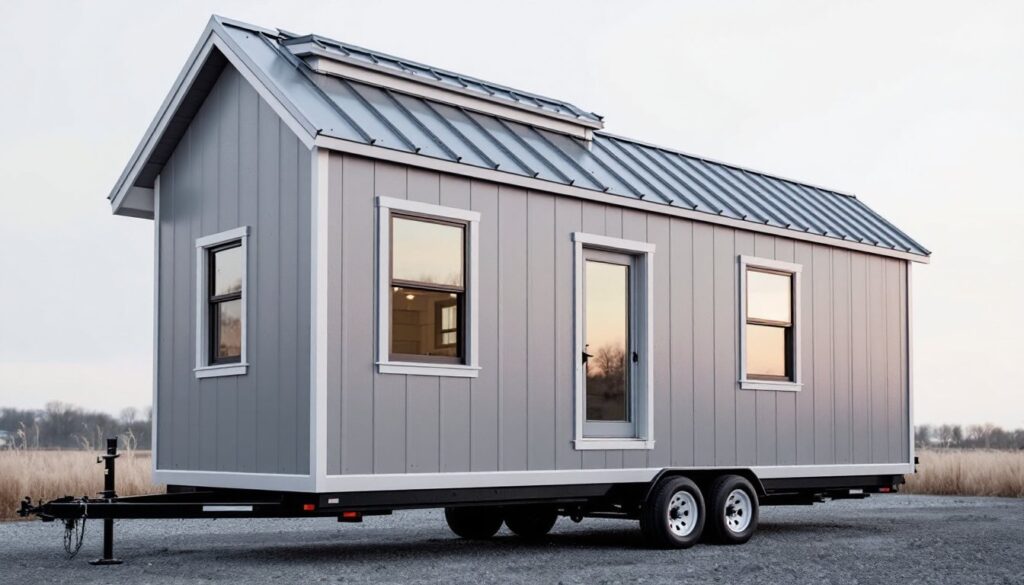
Tiny houses on wheels (THOWs) are built on steel trailer frames rated for highway towing, typically 20 to 28 feet long and 8.5 feet wide to stay under DOT oversize limits. Construction follows RV Industry Association (RVIA) or Noah Certification standards, which cover structural tie-downs, LP gas systems, and 30- or 50-amp electrical service.
Most THOWs in Florida use SIP panels (structural insulated panels) or traditional 2×4 framing with spray-foam insulation to handle humidity. Expect LP or electric appliances, propane ranges, tankless water heaters, and composting toilets are common. Florida’s hurricane codes don’t formally apply to THOWs classified as RVs, but anchoring systems (ground augers, concrete pads, or tie-down straps rated for 120 mph winds) are prudent in coastal zones.
Used tiny houses for sale in Florida with land often appear on private parcels where owners placed a THOW as a guest house or rental. Verify the trailer frame’s VIN, axle condition, and tire age, dry rot accelerates in Florida heat. A pre-purchase inspection by an RV tech or certified tiny home builder costs $200 to $400 but catches brake issues, moisture intrusion, or electrical faults.
Tiny Houses on Foundations
Foundation-based tiny homes range from 400 to 800 square feet and must meet Florida Building Code (FBC), which references the International Residential Code (IRC) with state amendments. These homes sit on monolithic slab, pier-and-beam, or crawlspace foundations and require standard permitting: building, electrical, plumbing, and mechanical.
Construction mirrors conventional framing: 2×6 exterior walls, roof trusses rated for 150 mph wind, and impact-resistant windows in coastal High Velocity Hurricane Zones (HVHZ). Setbacks, septic or sewer hookups, and minimum square footage ordinances (often 600 to 750 square feet in municipalities) can block projects, so rural or agricultural-zoned parcels offer more flexibility.
Prefab or modular tiny homes ship in one or two sections and set on-site in a day. Manufacturers like Studio Shed or Tumbleweed deliver turnkey shells: buyers finish interiors or hire local contractors. Expect $150 to $250 per square foot for a finished modular unit, excluding land and site prep.
Where to Find Tiny Homes for Sale in Florida
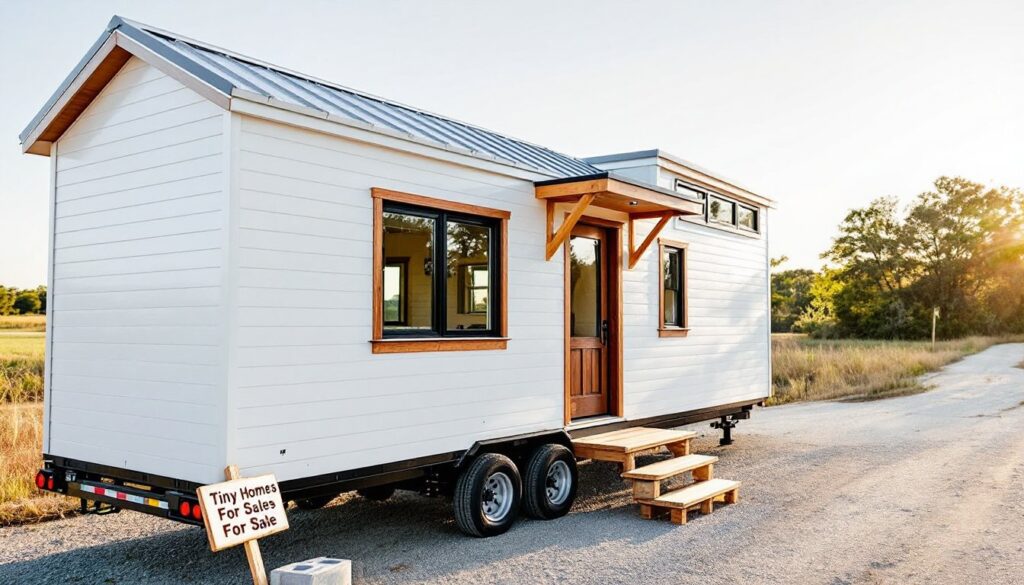
Online marketplaces dominate the search. Tiny House Listings, Tiny Home Builders, and Tiny House Marketplace aggregate new and used inventory. Filter by “Florida” and “land included” to surface tiny homes for sale in Florida by owner, often rural properties in Levy, Putnam, or Polk counties where sellers bundle a THOW or foundation home with one to five acres.
Facebook Marketplace and Craigslist yield used options. Search “tiny home Florida” or “tiny house for sale Orlando” weekly: turnover is high. Vet sellers carefully, request build receipts, photos of the trailer VIN or foundation permit, and proof of title or ownership. A $35,000 used THOW without clear title becomes unsellable and uninsurable.
Tiny home builders in Florida include Movable Roots (custom THOWs), Tiny House Siesta (modular designs), and national outfits like Tumbleweed or New Frontier that ship to Florida. Lead times run three to nine months for custom builds: expect a 30% deposit and progress payments tied to framing, systems rough-in, and final delivery.
RV dealerships and communities occasionally stock certified tiny homes or park models (RVs up to 400 square feet). Lazy Days RV in Seffner or Camping World locations carry park models under $80,000. Some RV resorts in the Keys or Panhandle allow long-term leases with purchase options.
Auctions and estate sales surface used inventory. Search Zillow’s “For Sale by Owner” and LandWatch for parcels with existing tiny structures. Houzz connects buyers with custom builders and architects specializing in ADUs (accessory dwelling units) that double as tiny homes on family lots.
Florida Zoning Laws and Regulations for Tiny Homes
Florida lacks statewide tiny home legislation: county and municipal codes govern placement. Challenges break into three categories: minimum square footage, zoning classifications, and utility hookups.
Minimum square footage ordinances in cities like Tampa, Orlando, and Jacksonville mandate 600 to 1,000 square feet for permanent residences. Rural counties, Gilchrist, Lafayette, Dixie, often have no minimums or allow homes as small as 360 square feet under agricultural exemptions. Call the county building department and ask for the minimum habitable area requirement before buying land.
Zoning classifications determine where tiny homes land legally. THOWs certified as RVs fit in RV parks, campgrounds, or properties zoned for temporary structures. Foundation-based tiny homes require residential zoning (R-1, R-2) or agricultural zones permitting single-family dwellings. Placing a THOW on residential land as a primary residence violates most codes unless the property allows “movable structures” or the home meets ADU guidelines.
Accessory Dwelling Units (ADUs) offer a workaround. Many counties permit ADUs, secondary dwellings on the same lot as a primary home, between 300 and 800 square feet. Orlando’s ADU ordinance allows units as small as 350 square feet if the main house exists. Foundation, utilities, and setbacks must comply with FBC, and the owner must occupy either the primary or accessory unit.
Septic and electrical hookups trigger permitting. A tiny home on a lot without public sewer needs a septic system sized to bedroom count (minimum two-bedroom equivalent in most counties, requiring a 600- to 750-gallon tank). Electrical service demands a 200-amp panel if the tiny home includes electric heat or a well pump: a licensed electrician must pull permits. Off-grid setups (solar, composting toilets, rainwater catchment) remain legal but don’t exempt builders from structural and safety permits.
Some jurisdictions outright ban tiny homes. Miami-Dade’s Building Code requires homes exceed 750 square feet: Palm Beach County disallows THOWs as permanent residences countywide. Before signing a purchase agreement, confirm with the local planning and zoning department that the intended use, primary residence, rental, or ADU, is permitted.
What to Consider Before Buying a Tiny Home in Florida
Wind and flood resilience top the list. If the property sits in a FEMA flood zone (check FEMA’s Flood Map Service Center), foundation elevation requirements may add $10,000 to $20,000 in fill, piers, or stilts. Flood insurance through the National Flood Insurance Program (NFIP) costs $400 to $2,000 annually depending on zone and elevation.
THOWs face wind-load challenges. Standard RV tie-downs won’t meet 150 mph sustained wind thresholds in coastal counties. Installing ground anchors rated for 5,000 pounds and steel cables prevents displacement but voids mobility. Some buyers register THOWs as RVs to bypass building codes, then discover homeowners insurance won’t cover structures used as primary residences, only RV policies apply, capping coverage at the vehicle’s depreciated value.
Utilities and site prep add hidden costs. Running electric service 500 feet from the road costs $3,000 to $7,000 (trenching, wire, transformer fees). Drilling a well averages $5,000 to $8,000: connecting to county water runs $1,500 to $3,000 plus tap fees. A standard septic install for a two-bedroom equivalent costs $6,000 to $12,000. Budget $15,000 to $25,000 total for utilities on raw land.
Financing remains difficult. Most banks won’t underwrite mortgages on homes under 600 square feet or structures lacking permanent foundations. Personal loans, RV loans (for certified THOWs), or builder financing carry higher interest, 7% to 12% versus 6.5% to 7.5% for conventional mortgages. Cash purchases dominate the market: a $55,000 used tiny home with land in rural Florida often sells faster than listed because buyers can’t secure loans.
Resale value hinges on location and legality. A permitted, foundation-based tiny home on a platted lot appreciates like conventional real estate. A THOW parked on unzoned agricultural land without permits appeals only to niche buyers and may sell for 20% to 40% below construction cost. Apartment Therapy showcases creative tiny home interiors that maximize resale appeal through efficient layouts and quality finishes.
Lifestyle fit deserves honest assessment. A 300-square-foot THOW has no room for a full-size washer, standard refrigerator, or spare bedroom. Composting toilets require weekly maintenance: loft bedrooms with 38-inch ceiling clearance challenge anyone over six feet tall. Visit an existing tiny home or rent one on Airbnb for a weekend before committing $60,000 to $100,000. The savings vanish if the space feels unlivable after six months.