Table of Contents
ToggleYour Instant Pot lid is starting to smell like yesterday’s chili, and you’re staring at your dishwasher wondering if you can just toss it in. The short answer? It depends on which lid you’ve got. Instant Pot makes several types of lids, pressure cooking, glass, and silicone, and not all of them play nice with dishwasher heat and detergent. Getting this wrong can warp seals, damage valves, or leave you with a lid that won’t lock. This guide breaks down exactly which Instant Pot components are dishwasher-safe, how to clean them properly, and when hand washing is the smarter move.
Key Takeaways
- The Instant Pot lid body itself should not go in the dishwasher as a complete assembly, but individual removable components like the sealing ring, float valve, and anti-block shield are dishwasher-safe on the top rack.
- Glass and silicone storage lids are fully dishwasher-safe, though the glass lid gasket should be removed and washed separately to prevent odor buildup.
- Always disassemble the pressure lid completely before washing, place small parts in a utensil basket to prevent them from falling through the rack, and air-dry all components thoroughly before reassembling.
- A hybrid cleaning approach—hand washing the main lid body after each use and running removable parts through the dishwasher weekly—extends component longevity while maintaining convenience.
- The sealing ring absorbs odors easily, so avoid washing it with strong-smelling items, and use a vinegar-water soak (1:1 ratio) for stubborn smells that dishwasher cleaning alone won’t eliminate.
- Never use the heated dry cycle on silicone parts, as sustained high heat can cause cracking or loss of elasticity over time.
Understanding Your Instant Pot Lid Components
Before you load anything into the dishwasher, you need to know what you’re dealing with. The standard Instant Pot pressure cooking lid isn’t a single piece, it’s an assembly of parts that each require different care.
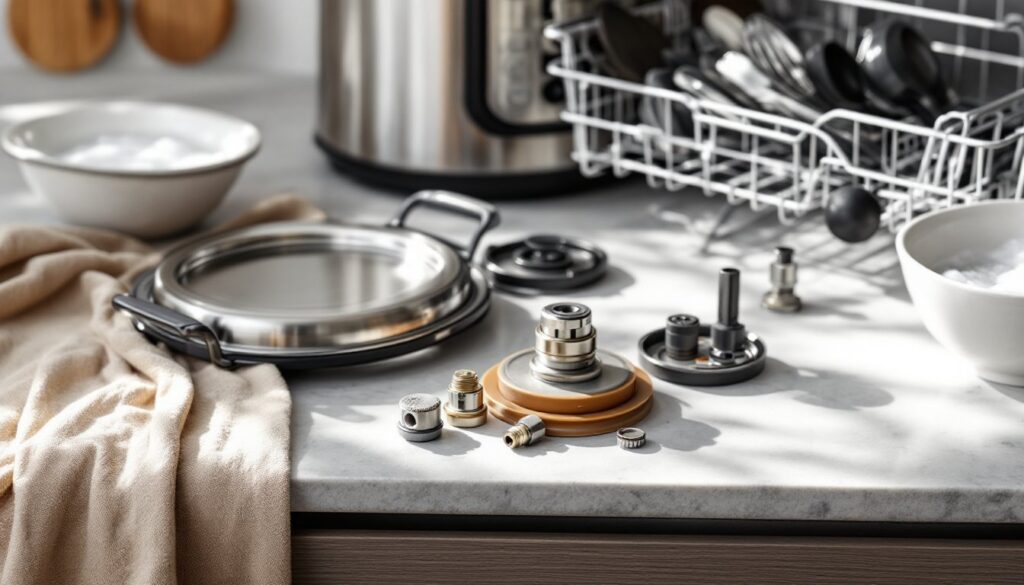
The main components include the stainless steel lid body, the silicone sealing ring, the float valve, the steam release handle, and the anti-block shield. Each of these parts can be removed for cleaning, and that’s actually the key to proper maintenance.
The sealing ring is the rubberized gasket that sits in a groove around the underside of the lid. It’s the most likely part to absorb odors and stains because it comes into direct contact with steam and food particles. The float valve is the small pin that pops up to indicate pressure, and the steam release handle is the switch you flip to vent. Both contain small openings that can clog with food residue.
The anti-block shield is a small metal cap that covers the venting system on the underside of the lid. It prevents food from blocking the steam release. All of these parts snap or twist out with minimal effort, consult your model’s manual if you’re unsure, but most simply pull free once you know where to apply pressure.
Which Instant Pot Lids Are Dishwasher Safe?
Not all Instant Pot lids can handle the dishwasher, and the rules vary depending on whether you’re dealing with the main pressure lid or an accessory lid.
Standard Pressure Cooking Lid
Instant Pot officially states that the stainless steel lid body itself should not go in the dishwasher as a complete assembly. The concern isn’t the metal, it’s the valves and internal mechanisms that can get damaged by high heat or jostled loose by spray arms.
But, the individual components that you remove from the lid, sealing ring, anti-block shield, float valve, and steam release handle, are all dishwasher-safe and can go on the top rack. Place them in a utensil basket or secure them so they don’t fall through the rack slats. The sealing ring especially benefits from a dishwasher cycle because cleaning kitchen silicone components helps eliminate trapped odors that hand washing sometimes misses.
If your lid has a condensation collector (a small plastic cup that clips to the back), that’s also top-rack dishwasher-safe. Just make sure it doesn’t flip over during the wash cycle, or it’ll fill with dirty water.
Glass and Silicone Lids
Instant Pot sells tempered glass lids and silicone sealing lids as accessories for slow cooking or storage. Both of these are fully dishwasher-safe, including the lid bodies themselves.
The glass lid is made from tempered glass with a steam vent and stainless handle. It can go on either the top or bottom rack, though the top rack is gentler and reduces the chance of chipping if other items shift during the cycle. The silicone gasket on the underside of the glass lid should be removed and washed separately to prevent odor buildup.
Silicone lids (usually sold as a multi-pack in various sizes) are flexible, food-safe silicone covers used for storage. They’re dishwasher-safe on any rack, but top-rack placement prevents warping if your dishwasher runs especially hot. These lids don’t have valves or moving parts, so there’s no disassembly required.
Best Practices for Cleaning Instant Pot Lids in the Dishwasher
If you’re going to use the dishwasher, do it right. Here’s how to avoid damage and get the best results.
Disassemble completely. Don’t try to clean the pressure lid as one piece. Remove the sealing ring, float valve, steam release handle, anti-block shield, and condensation collector. Each part should go into the dishwasher separately.
Use the top rack only. Even though some parts are heat-resistant, the top rack keeps them away from the heating element and reduces exposure to extreme temperatures. High heat can degrade silicone faster and may warp plastic components over time.
Secure small parts. The float valve and anti-block shield are tiny and can fall through the rack. Place them in a utensil basket or a small mesh laundry bag designed for dishwasher use. This prevents them from ending up in the filter or spray arm.
Skip harsh detergents. Standard dishwasher detergent is fine, but avoid anything with heavy bleach or caustic additives. These can break down silicone and leave residue on stainless steel. A mild, fragrance-free detergent works best for kitchenware that touches food.
Run a rinse cycle if needed. If your sealing ring smells strong even after washing, run it through an extra rinse cycle with a cup of white vinegar on the top rack. Vinegar neutralizes odors without damaging silicone.
Air-dry thoroughly. Don’t reassemble the lid until every part is bone-dry. Moisture trapped in the valve channels or under the sealing ring can promote mold or mildew. Lay parts out on a clean towel for at least an hour, or let them dry overnight.
Common Mistakes to Avoid When Washing Instant Pot Lids
Even with dishwasher-safe parts, certain habits can shorten the lifespan of your Instant Pot components or make them less effective.
Don’t wash the full pressure lid assembly. Putting the entire lid, valves and all, into the dishwasher can dislodge or damage the float valve and steam release mechanism. Those parts aren’t designed to withstand the force of a dishwasher spray arm at full blast.
Don’t place the sealing ring near strong-smelling items. Silicone absorbs odors easily. If you wash your sealing ring in the same load as garlic-covered plates or fishy cookware, it’ll pick up those smells. Some users keep a separate sealing ring for sweet and savory dishes, which is a smart workaround.
Don’t skip the anti-block shield. This small part is easy to overlook, but if it clogs with food residue, your Instant Pot won’t vent properly and could fail to build pressure. Clean it every time you disassemble the lid.
Don’t use the heated dry cycle on silicone parts. While the sealing ring can handle dishwasher heat, the heated dry cycle on some dishwashers runs hotter than the wash cycle. Over time, this can cause silicone to crack or lose elasticity. Turn off heated dry and let parts air-dry instead.
Don’t forget to inspect parts after washing. Check the sealing ring for cracks, the float valve for blockages, and the steam release handle for smooth movement. A clean part that’s damaged won’t perform any better than a dirty one.
Hand Washing vs. Dishwasher: What Works Best?
The dishwasher is convenient, but hand washing gives you more control and can extend the life of certain components. Here’s when to choose each method.
Hand washing is the safer choice for the stainless steel lid body. Use warm water, a few drops of dish soap, and a soft sponge. Pay attention to the underside where food splatters tend to collect. Wipe down the valves and venting channels with a damp cloth, then dry everything thoroughly. This method takes about three minutes and eliminates the risk of valve damage.
For the sealing ring, hand washing works if you scrub with a brush and use hot, soapy water. But, many users find that silicone retains odors even after hand washing. In that case, the dishwasher’s higher water temperature and longer soak time can help. Some people soak their sealing rings in a vinegar-water solution (1:1 ratio) for 15 minutes before hand washing to neutralize stubborn smells.
Glass lids and silicone storage lids are easy to hand wash and dry quickly, but there’s no real downside to using the dishwasher. If you’re already running a load, toss them in. If you’re not, a quick hand wash saves energy.
The anti-block shield, float valve, and steam release handle are small enough that hand washing feels fussy. These are ideal candidates for the dishwasher’s utensil basket, where they get a thorough clean without extra effort on your part.
Eventually, the best approach is a hybrid: hand wash the main lid body after each use, and run the removable parts through the dishwasher once or twice a week depending on how often you cook. This balances convenience with component longevity and keeps your Instant Pot ready for the next batch of chili, without the lingering smell of the last one.