Table of Contents
ToggleReal plants look great until they don’t. Overwatering kills succulents, low light kills ferns, and forgetting to water kills everything else. Indoor artificial plants solve that problem without sacrificing the look of greenery. Modern faux plants have come a long way from the dusty plastic ivy of the ’90s, today’s options use realistic textures, natural color variation, and even UV resistance to mimic the real thing. Whether you’re working with a windowless bathroom, a high shelf you can’t reach to water, or just want low-maintenance décor that doesn’t require a green thumb, artificial plants are a practical solution that actually works.
Key Takeaways
- Indoor artificial plants eliminate the need for sunlight, watering schedules, and humidity control, making them ideal for windowless rooms, frequent travelers, and homes with poor natural light.
- High-quality artificial plants feature multi-tonal leaves, realistic textures, bendable stems, and UV resistance to convincingly mimic live greenery without the ongoing costs of soil, fertilizer, or replacements.
- The best artificial plants for any room depend on purpose—statement pieces like fiddle-leaf figs for living rooms, low-light favorites like eucalyptus and ferns for bathrooms, and layered arrangements of varying heights to create visual depth.
- Regular maintenance with microfiber cloths, monthly deep cleaning with mild soap and water, and proper storage can keep quality artificial plants looking realistic for 5–10 years.
- Styling artificial plants in intentional arrangements with real pots, natural textures, and strategic lighting makes them look more authentic and prevents the “lonely houseplant” appearance.
Why Indoor Artificial Plants Are a Game-Changer for Modern Homes
Artificial plants eliminate the trial-and-error of keeping live greenery alive in less-than-ideal conditions. They don’t need sunlight, consistent watering schedules, or humidity control, making them ideal for rooms with poor natural light, renters who can’t install grow lights, or anyone who travels frequently.
Unlike real plants, faux greenery won’t attract pests like fungus gnats or spider mites. There’s no soil to spill, no root-bound pots to repot, and no seasonal die-off. For homes with pets or young kids, many artificial options bypass the toxicity concerns that come with plants like pothos or snake plants.
From a design standpoint, artificial plants offer consistency. They won’t drop leaves, lose color, or grow leggy over time. This makes them useful for styled shelves, mantels, or high-up spaces where plant health would be hard to monitor. They also hold up well in commercial-grade applications, lobbies, offices, or rentals, where maintenance isn’t always practical.
Cost-wise, the upfront investment is higher than a $10 nursery plant, but there’s no ongoing expense for soil, fertilizer, or replacements. A quality faux fiddle-leaf fig can run $80–$200 depending on size, but it won’t die six months later from inconsistent watering.
The main trade-off is aesthetic authenticity. Even high-end artificial plants lack the subtle movement, scent, and air-purifying benefits of living greenery. But for rooms where real plants simply won’t thrive, they’re a better option than bare shelves or dead foliage.
How to Choose High-Quality Artificial Plants That Look Real
Not all artificial plants are created equal. The difference between a realistic fake and an obvious one comes down to materials, construction, and attention to detail.
Look for multi-tonal leaves. Real plants have color variation, lighter new growth, darker mature leaves, occasional brown edges. Cheap artificial plants use a single flat color. Better options layer greens, use hand-painted details, or incorporate subtle yellowing to mimic natural aging.
Check the leaf texture. Run your hand over the foliage. Quality faux plants use materials like polyethylene (PE) or silk-screened fabric with visible veining, texture, and matte finishes. Glossy, hard plastic is a dead giveaway. Some high-end options even use real preserved wood for trunks or stems.
Inspect the stem and branch structure. Real plants don’t grow in perfect symmetry. Look for faux plants with bendable wire stems that can be repositioned, varied branch lengths, and irregular spacing. Avoid anything that looks like it was stamped from a mold.
Weight matters. A quality artificial tree or potted plant should feel substantial. Flimsy stems and lightweight plastic pots tip over easily and look cheap. Many better options come with weighted bases or include gravel or foam inserts to add stability.
UV resistance is key for bright rooms. If the plant will sit near a window, confirm it’s UV-stabilized. Non-treated faux plants fade quickly in direct sun, turning chalky or discolored within months. Some manufacturers list UV ratings, look for products rated for at least 1,000–2,000 hours of sun exposure.
Size and scale should match the space. A 6-foot fiddle-leaf fig works in a living room with 9-foot ceilings but overwhelms a bedroom. Measure the space first, and remember that most product photos exaggerate scale.
Best Types of Artificial Plants for Every Room
Living Rooms and Bedrooms
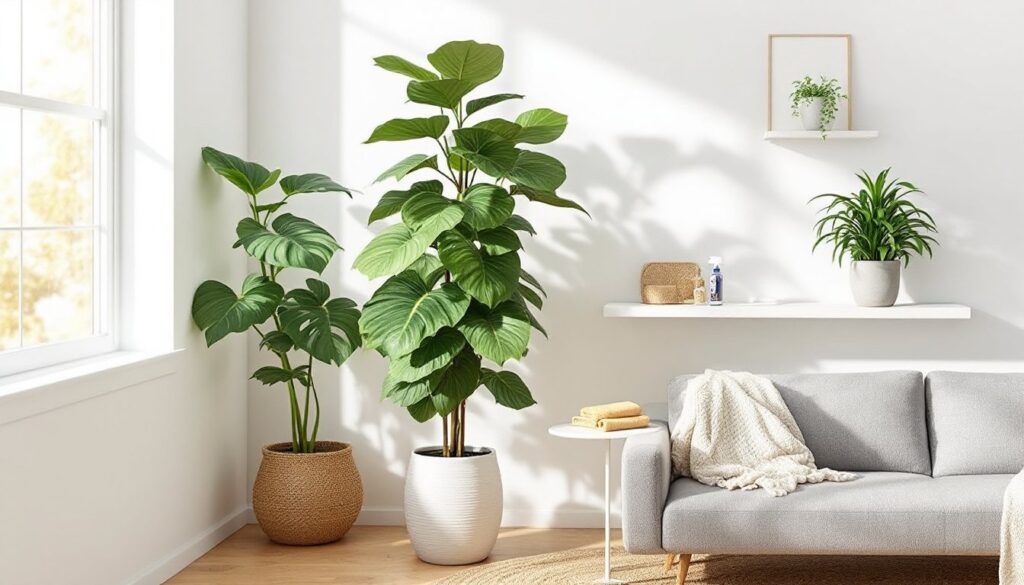
For high-visibility spaces, go with statement plants that mimic popular real varieties. Fiddle-leaf figs, monstera, and birds of paradise are common choices because their large, dramatic leaves photograph well and fill vertical space without overcrowding.
Potted faux succulents and cacti work on coffee tables, nightstands, or bookshelves. They’re small enough to style in multiples and realistic enough to pass a quick glance. Look for options with varied pot finishes, concrete, terracotta, or ceramic, rather than generic plastic.
Hanging plants like pothos, string of pearls, or Boston ferns add dimension to corners or above furniture. Make sure hanging planters include a sturdy mounting hook rated for the weight. Many decorative planters aren’t designed to hold anything heavier than a few ounces, so check the hardware before installing.
Design experts on platforms like Apartment Therapy often recommend layering faux plants with real ones for added realism, using artificial options in hard-to-reach spots and live plants where they’ll get proper care.
Bathrooms and Low-Light Spaces
Bathrooms, hallways, and windowless rooms are where artificial plants earn their keep. Real plants struggle in low humidity or zero natural light, but faux versions thrive.
Eucalyptus, ferns, and bamboo are bathroom staples. Eucalyptus stems work well in vases on counters or hung from showerheads (though avoid direct water spray, most aren’t waterproof). Faux ferns fit on shelves or in wall-mounted planters without the moisture sensitivity of real ones.
For narrow hallways or powder rooms, wall-mounted planters or small potted snake plants (real or faux) add greenery without taking up floor space. Make sure wall-mount hardware is appropriate for your wall type, drywall anchors for hollow walls, masonry anchors for tile or concrete.
In basements or interior rooms, consider larger floor plants like areca palms or rubber trees. These fill empty corners and don’t require the grow lights a real plant would need. Just keep them away from HVAC vents, constant airflow can loosen poorly glued leaves over time.
Creative Styling Ideas for Indoor Faux Greenery
Artificial plants work best when styled with intention, not just dropped into a corner.
Layer heights and textures. Group plants of different sizes together, a tall floor plant, a mid-height potted fern, and a trailing succulent on a stack of books. This mimics how real plants grow in varied layers and avoids the “lonely houseplant” look.
Use real pots and planters. The fastest way to upgrade a cheap faux plant is to ditch the plastic nursery pot and replant it in a ceramic, terracotta, or woven basket planter. Add a layer of decorative gravel, moss, or bark chips on top of the base for a finished look. Some DIYers secure plants with floral foam or dry florist’s foam cut to fit the pot, then cover it with moss.
Mix with real elements. Pair artificial greenery with real wood slices, river rocks, or driftwood. The contrast in textures makes the faux foliage less obvious. Interior design blogs like Decoist often feature styling tips that combine natural materials with faux plants for a cohesive look.
Create vertical displays. Wall-mounted grids, pegboards, or floating shelves let you arrange small potted plants at varying depths. This adds dimension and draws the eye upward, making rooms feel taller.
Use lighting to your advantage. Position faux plants near lamps or under track lighting. Shadows and highlights add depth and make plastic leaves less noticeable. Avoid placing them directly under harsh overhead fluorescents, which expose texture flaws.
Rotate seasonally. Swap out plants or reposition them every few months to keep the look fresh and prevent dust buildup in one spot.
How to Clean and Care for Your Artificial Plants
Dust is the enemy of realistic faux plants. A thin layer of grime makes even high-quality greenery look fake and neglected.
Weekly dusting: Use a microfiber cloth or a soft paintbrush to wipe down leaves. For plants with lots of small leaves (like ferns or boxwood), a handheld vacuum with a brush attachment works faster. Hold the stem steady while vacuuming to avoid pulling leaves loose.
Monthly deep clean: Take the plant outside or into a bathtub. Use a spray bottle filled with water and a few drops of mild dish soap. Mist the foliage, let it sit for a minute, then rinse with a gentle stream from a handheld showerhead or hose. Shake off excess water and let it air-dry completely before bringing it back inside. Avoid soaking the base or pot, water can seep into foam inserts or glued joints and cause deterioration.
For delicate fabrics: Silk or fabric leaves can’t handle water. Instead, use a hairdryer on cool setting to blow off dust, or lightly dab with a damp (not wet) cloth. Some crafters recommend DIY cleaning techniques using cornstarch or salt in a plastic bag, add the plant, shake gently, then brush off residue.
Spot repairs: If a leaf tears or a stem breaks, use clear craft glue or a low-temp glue gun to reattach. For faded plants, some DIYers refresh them with matte acrylic spray paint in green tones, though results vary depending on the original material.
Storage: If rotating plants seasonally, store them in a cool, dry place away from direct sunlight. Wrap delicate stems in tissue paper to prevent bending, and keep them in a bin with a lid to avoid dust accumulation.
With minimal upkeep, quality artificial plants can look good for 5–10 years or longer, far outlasting most people’s track record with real houseplants.