Table of Contents
TogglePotato salad’s a cookout staple and a make-ahead favorite, but it’s also one of the most misunderstood dishes when it comes to food safety. That creamy, mayo-based side sits in what food safety folks call the “danger zone” when left out too long, and even properly refrigerated, it won’t last forever. Knowing exactly how long potato salad keeps, and how to spot when it’s gone south, can prevent foodborne illness and save you from tossing a perfectly good batch. Whether you’re meal-prepping for the week or storing leftovers from a backyard BBQ, understanding the shelf life and storage best practices makes all the difference between enjoying that second helping and risking a stomachache.
Key Takeaways
- Mayo-based potato salad lasts 3 to 5 days in the refrigerator, while vinegar-based varieties can last up to 5-7 days due to added acidity and lack of dairy.
- Always use your senses to check for spoilage—sour odors, discoloration, mold, or mushy texture are clear signs to discard the potato salad.
- Cool freshly made potato salad quickly in shallow containers and refrigerate within two hours, storing it on middle or lower shelves at 35-38°F in airtight containers.
- Potato salad left at room temperature for more than two hours (or one hour above 90°F) enters the danger zone and should be discarded, not refrigerated later.
- Freezing potato salad is not recommended as potatoes become mushy and mayo-based dressings separate; instead, make smaller batches or store components separately and dress fresh.
Refrigerator Storage Timeline for Potato Salad
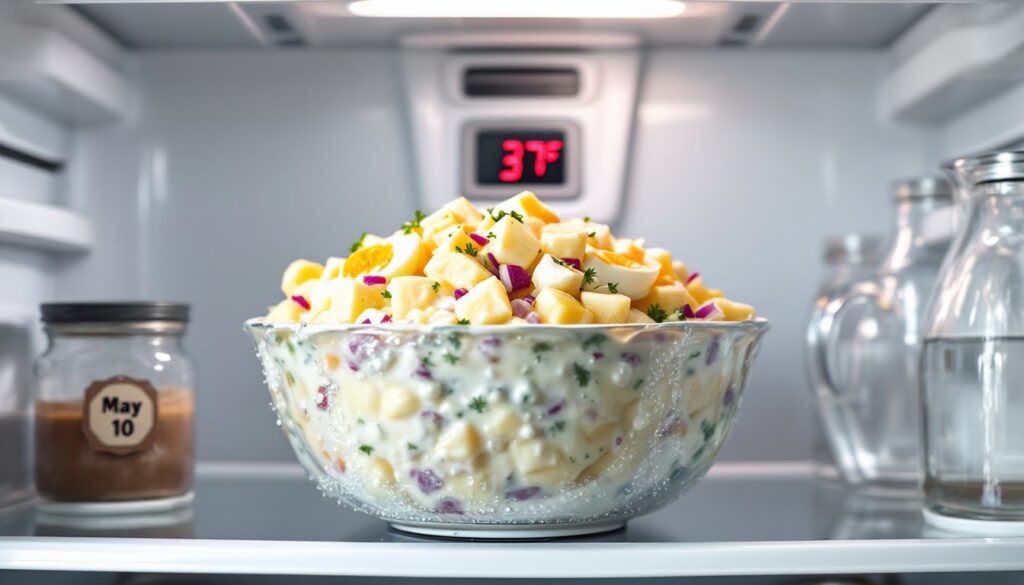
The general rule for potato salad storage is simple: 3 to 5 days in the refrigerator, max. But that timeline shifts based on ingredients, preparation method, and how quickly it gets chilled after serving.
Mayo-based potato salad has the shortest shelf life because mayonnaise contains eggs, which are highly perishable. Once mixed with cooked potatoes, onions, and other add-ins, the clock starts ticking. Even at a steady 35-40°F fridge temp, bacterial growth slows but doesn’t stop entirely.
Vinegar-based or oil-dressed potato salads (like German-style) last a bit longer, up to 5-7 days, because the acidity and lack of dairy extend freshness. Still, once vegetables start breaking down and releasing moisture, texture and flavor degrade fast.
Store-Bought vs. Homemade Potato Salad
Store-bought potato salad typically includes preservatives and stabilizers that extend shelf life. Check the “use by” date on the container, most last 7-10 days unopened in the fridge. Once opened, treat it like homemade: consume within 3-5 days and keep it tightly sealed.
Homemade potato salad lacks those preservatives, so it’s more vulnerable. If you used farm-fresh eggs in your mayo or added ingredients like bacon, hard-boiled eggs, or fresh herbs, the 3-day mark is your safest bet. Always store homemade batches in an airtight container, never leave it in a serving bowl covered with plastic wrap, which doesn’t seal out bacteria or odors.
Signs Your Potato Salad Has Gone Bad
Don’t rely on the calendar alone. Your senses are the best food safety tool you’ve got.
Smell test: Sour, tangy, or off odors are the first red flag. Fresh potato salad smells mild, slightly eggy, or herbaceous. If it smells like vinegar (and it’s not a vinegar-based recipe) or has a fermented funk, toss it.
Visual cues: Look for discoloration, grayish or darkened potatoes, browning around the edges, or any fuzzy mold growth on the surface or container lid. Separated liquid pooling at the bottom is normal in the first day or two, but excessive watery separation after day three suggests breakdown.
Texture changes: Mushy, slimy potatoes or a gritty, curdled dressing mean spoilage. Fresh potato salad has firm (but tender) potato chunks and a creamy, cohesive dressing.
Taste (use caution): If it passes the smell and visual checks but you’re still unsure, a tiny taste can confirm, but spit it out if anything tastes sour, bitter, or metallic. When in doubt, throw it out. Food poisoning from spoiled mayo-based salads can cause severe gastrointestinal distress, and it’s not worth the risk.
Best Practices for Storing Potato Salad Safely
Proper storage starts the moment you finish mixing.
Cool it fast: Don’t let freshly made potato salad sit at room temperature. Spread it in a shallow, wide container (a 9×13-inch glass or plastic storage container works great) to speed cooling, then refrigerate immediately. The goal is to drop the internal temp below 40°F within two hours.
Use airtight containers: Glass or BPA-free plastic containers with tight-sealing lids prevent odor absorption and moisture loss. Avoid metal containers, which can react with acidic ingredients and cause off-flavors.
Keep it cold: Store potato salad on a middle or lower shelf in the fridge, not in the door where temps fluctuate. Maintain fridge temperature at 35-38°F for optimal freshness.
Portion control: If you’ve made a big batch, divide it into smaller containers. You’ll only expose what you plan to eat, keeping the rest sealed and fresh. Label containers with the prep date using masking tape and a marker.
Don’t cross-contaminate: Always use a clean spoon when scooping. Double-dipping or using utensils that touched raw meat introduces bacteria that accelerate spoilage.
Can You Freeze Potato Salad to Extend Its Life?
Short answer: not recommended. Potato salad’s texture doesn’t survive freezing well.
Why freezing fails: Potatoes have high water content. When frozen, ice crystals rupture cell walls, turning them mushy and grainy once thawed. Mayo-based dressings also separate and curdle in the freezer, leaving you with a watery, unappetizing mess.
Vinegar-based exceptions: Oil-and-vinegar potato salads fare slightly better, but still suffer texture loss. If you absolutely must freeze, expect a significant drop in quality. Thawed salad works better as a base for potato soup or mashed into a casserole than served cold.
Better alternatives: Make smaller batches or prep components separately. Cook and refrigerate plain potatoes (they last 5-7 days), then dress them fresh when you’re ready to serve. Store dressing in a separate jar. This method keeps ingredients fresher and gives you more control over flavor and texture.
Food Safety Tips for Potato Salad at Gatherings
Potato salad’s the most common culprit at summer picnics and potlucks. The USDA’s two-hour rule is non-negotiable: perishable foods left at room temp for more than two hours (or one hour above 90°F) enter the danger zone for bacterial growth.
Keep it cold: Use a cooler with ice packs or nestle the serving bowl in a larger bowl filled with ice. Replenish ice as it melts. For outdoor events, some hosts keep backup supplies chilled and swap out the serving bowl every hour.
Serve in stages: Don’t set out the entire batch. Keep half refrigerated and refill as needed. Smaller portions stay colder longer.
Transport smart: Pack potato salad in an insulated cooler with frozen gel packs on all sides. Place it in the coolest part of your vehicle (not the trunk in summer) and transfer to refrigeration as soon as you arrive.
Leftovers after the party: If potato salad sat out longer than two hours, discard it. Refrigerating it after extended room-temp exposure won’t reverse bacterial growth, it just slows it down. Better safe than sorry.
How to Make Potato Salad Last Longer
A few prep tweaks can add a day or two to your potato salad’s fridge life.
Choose waxy potatoes: Yukon Golds or red potatoes hold their shape and texture better than russets, which break down faster and absorb too much dressing.
Don’t overcook: Boil potatoes until just fork-tender, around 10-15 minutes depending on size. Overcooked potatoes turn mushy and spoil faster. Drain immediately and let them cool completely before dressing.
Add acid: A tablespoon of white vinegar or lemon juice mixed into the dressing lowers pH and inhibits bacterial growth. It also brightens flavor.
Hold the eggs and bacon (temporarily): Hard-boiled eggs and bacon reduce shelf life. If making ahead, store cooked eggs and bacon separately and fold them in the day you plan to serve.
Use commercial mayo: Store-bought mayonnaise is pasteurized and contains preservatives that help it last longer than homemade. If you prefer homemade, use it fresh and plan to consume the salad within 2-3 days.
Season smartly: Salt draws moisture out of vegetables, which can make potato salad watery and shorten its life. Add salt closer to serving time, or use just enough to season the potatoes while they’re warm (they’ll absorb it better).
By treating potato salad with the same food safety respect you’d give raw chicken or seafood, you’ll keep your family safe and your leftovers delicious. Proper refrigeration, airtight storage, and knowing when to call it quits are the simplest ways to get the most out of every batch.