Table of Contents
ToggleIf you’re planning a kitchen remodel or just reorganizing your countertop setup, knowing exactly how much your stand mixer weighs isn’t trivial, it’s practical information that affects everything from cabinet strength to whether you’ll actually lift it in and out of storage. KitchenAid mixers range dramatically in weight depending on the model, from compact tilt-head units around 20 pounds to heavy-duty commercial machines pushing 30 pounds or more. Understanding these weight differences helps you make smarter decisions about counter space, storage solutions, and which model fits your actual cooking habits.
Key Takeaways
- KitchenAid mixer weight ranges from 14 to 30 pounds depending on the model, with most home models falling between 22–26 pounds, directly affecting storage and countertop stability decisions.
- Tilt-head models like the Artisan weigh 20–24 pounds and suit occasional bakers, while heavier bowl-lift Professional models at 25–29 pounds offer superior motor power for serious bread baking and dense batters.
- A lighter 22-pound Artisan is easily repositionable on counters, whereas a 28-pound Professional model stays planted during stiff dough mixing, preventing unwanted shifting and strain on your kitchen workspace.
- Storage practicality matters: if you plan pull-out shelves or mixer lifts, verify hardware is rated for at least 100 pounds; lighter models like the 14-pound Artisan Mini sacrifice capacity for portability.
- Heavier KitchenAid mixers have larger motors, all-metal gears, and better heat dissipation, translating to longer service life and the ability to handle tough tasks without overheating.
Understanding KitchenAid Mixer Weight Ranges
KitchenAid stand mixers generally fall into a weight spectrum between 20 and 30 pounds, with most home models clustering in the 22–26 pound range. The weight variation comes down to motor size, bowl capacity, metal versus plastic construction, and whether the mixer uses a tilt-head or bowl-lift mechanism.
Tilt-head models (where the motor head tilts back for bowl access) typically weigh less, usually 20–24 pounds, because they have smaller motors and lighter frame construction. These are the mixers you see most often in home kitchens: the Classic, Classic Plus, and Artisan series.
Bowl-lift models (where the bowl raises and lowers on arms) run heavier, generally 25–29 pounds, thanks to larger motors (often 500+ watts), all-metal gears, and reinforced frames designed for continuous mixing of dense doughs. Professional and Commercial series mixers fall into this category.
The difference between a 22-pound Artisan and a 29-pound Commercial model might not sound huge on paper, but it’s the difference between easily sliding a mixer across a counter and needing two hands to reposition it. If you’re installing pull-out shelves or considering a mixer lift mechanism in a base cabinet, knowing the exact weight is critical for hardware selection, most standard pull-out shelf brackets are rated for 75–100 pounds, but you’ll want a safety margin.
Weight Breakdown by KitchenAid Mixer Model
Classic and Artisan Series Mixers
The KitchenAid Classic Series (K45SS) is the lightest full-size model at approximately 20–21 pounds. It features a 4.5-quart stainless bowl, a 250-watt motor, and a tilt-head design. This is the entry-level workhorse, great for occasional bakers who mix cookie dough and cake batter but don’t regularly tackle bread or heavy batters.
The Classic Plus (KSM75) weighs around 21–22 pounds and bumps capacity to 4.5 quarts with a slightly more robust motor. Weight is nearly identical to the Classic, but the motor housing is marginally thicker.
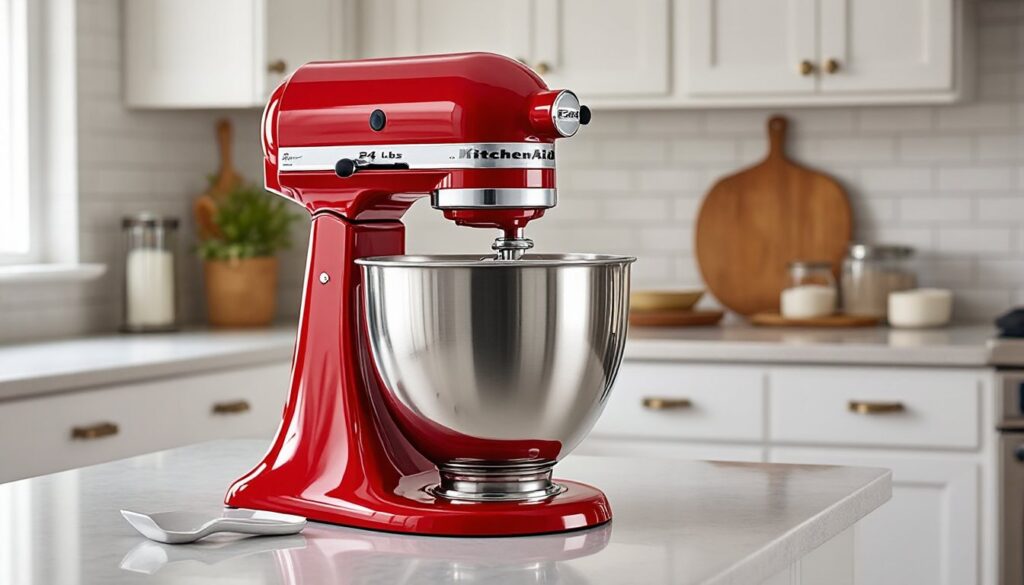
The Artisan Series (KSM150), the most popular home model, comes in at 23–24 pounds. It has a 5-quart bowl, a 325-watt motor, and the iconic tilt-head design. The extra pound over the Classic comes from the larger bowl, heavier die-cast metal construction, and planetary mixing action components. Home improvement enthusiasts appreciate the Artisan for countertop stability during medium-duty tasks without overwhelming smaller kitchens.
The Artisan Mini (KSM3311) is a compact outlier at just 14–15 pounds with a 3.5-quart bowl. It’s designed for small kitchens or light use, but the reduced weight means less stability when mixing stiff doughs, something to consider if you’re planning to use it frequently.
Professional and Commercial Series Mixers
The Professional 600 Series (KP26M1X) weighs approximately 28–29 pounds. It features a 6-quart bowl, a 575-watt motor, and a bowl-lift design. The added weight comes from a cast-metal frame, all-metal gears, and a motor designed for continuous use. This is the mixer you choose if you’re baking multiple loaves of bread weekly or mixing heavy batters regularly.
The Professional 5 Plus (KV25G0X) sits at around 25 pounds with a 5-quart bowl and bowl-lift mechanism. It’s lighter than the 600 Series due to the smaller bowl but still heavier than the Artisan because of the commercial-grade motor and frame.
The Commercial Series (KSM8990) tops the scale at 29–30 pounds. With an 8-quart bowl, a 1.3-horsepower motor, and NSF certification for commercial kitchens, this mixer isn’t moving unless you want it to. The extra heft provides rock-solid stability when mixing 14 cups of flour at once, but it also means this mixer lives on the counter, it’s not going in and out of a cabinet.
One recent model, tested extensively by kitchen reviewers, lists its weight as 24 lbs along with notable features like dishwasher-safe components and improved bowl access. Mid-range models like this balance power and portability for serious home bakers.
Why Mixer Weight Matters for Your Kitchen
Weight directly affects countertop stability. A 20-pound mixer might walk across a laminate counter when kneading stiff pizza dough, while a 28-pound Professional series stays planted. If your mixer shifts during operation, you’re dealing with either insufficient weight for the task or a countertop that isn’t level, check both before assuming you need a heavier model.
Storage practicality is the other half of the equation. A mixer stored in a base cabinet needs to come out every time you use it. Lifting 30 pounds from a low shelf repeatedly leads to either back strain or the mixer staying out permanently, cluttering your workspace. If you’re installing a mixer lift or pull-out shelf, verify the hardware’s weight rating. Standard soft-close undermount slides are rated for 75–100 pounds, which provides adequate margin for any home mixer, but bargain-bin slides may max out at 50 pounds and fail prematurely under repeated cycling.
Counter space in smaller kitchens often dictates whether a mixer lives out or gets stored. A 14-pound Artisan Mini fits in tighter spaces and moves easily, but it lacks the capacity and motor grunt for serious baking projects. Heavier models demand permanent real estate, know your kitchen layout before committing to a 29-pound mixer.
Portability matters if you bake in multiple locations or take your mixer to potlucks, family gatherings, or holiday baking sessions. A 22-pound Artisan in its original box is manageable for most people: a 30-pound Commercial model requires planning and possibly a hand truck.
Finally, weight correlates with motor durability and mixing performance. Heavier mixers generally have larger motors, all-metal gears, and better heat dissipation, which translates to longer service life and the ability to handle tougher tasks without overheating. If you’re mixing bread dough, fondant, or any stiff batter regularly, the extra pounds aren’t dead weight, they’re functional mass that keeps the mixer stable and the motor cool.
How to Choose the Right Weight Mixer for Your Needs
Start by assessing your actual usage patterns, not aspirational ones. If you bake once or twice a month and mostly make cakes, cookies, and whipped cream, a 22–24 pound Artisan or Classic Plus provides plenty of performance without the bulk. If you’re kneading bread dough weekly, making pasta from scratch, or mixing dense batters, the 28–29 pound Professional series models offer the motor power and stability to handle the workload.
Measure your counter space and storage options before buying. Use a tape measure to confirm the mixer’s footprint (most models are 14–16 inches tall and 10–12 inches wide) and check whether your base cabinets can accommodate the weight if you plan to store it. If your kitchen design includes a dedicated appliance garage or mixer lift, verify the mechanism is rated for the specific model’s weight plus a safety margin.
Consider whether you need a tilt-head or bowl-lift design. Tilt-heads are lighter and easier to use for quick tasks, you just tilt the head back, swap attachments, and go. Bowl-lifts are heavier but provide better clearance for large batches and don’t require overhead space, which matters if you’re placing the mixer under a cabinet.
Plan for future needs, especially if you’re outfitting a new kitchen or upgrading from a hand mixer. Many home bakers start with a Classic, outgrow it within two years, and wish they’d spent the extra $100–150 on an Artisan or Professional model. The weight difference is marginal, 3–5 pounds, but the motor capacity and bowl size make a real difference in what you can accomplish.
If you’re renovating or building custom cabinetry, talk to your cabinet installer about integrated mixer storage. A pull-out shelf with a lift mechanism adds $150–300 to a cabinet but eliminates the need to hoist a heavy mixer repeatedly. Make sure the installer specs hardware rated for at least 100 pounds to account for the mixer weight plus dynamic loading when you pull the shelf out.
For renters or anyone with limited counter space, the Artisan Mini at 14–15 pounds offers genuine portability and easy storage, but recognize the trade-offs: smaller bowl capacity (3.5 quarts vs. 5–6 quarts) and less motor power mean you can’t mix the same volumes or tackle the same tasks as heavier models. It’s a real mixer, not a toy, but it has limits.
Finally, think about resale and longevity. KitchenAid mixers hold value exceptionally well, and heavier Professional or Commercial models often last decades with minimal maintenance. If you’re investing in a mixer as part of a larger kitchen organization strategy or a serious home improvement project, spending more upfront for a durable, heavier model pays off in both performance and resale value.
Conclusion
KitchenAid mixer weight ranges from 14 pounds for compact models to 30 pounds for commercial-grade units, and that span matters for storage, countertop stability, and long-term usability. Match the weight to your actual baking habits, available counter space, and whether you’re willing to lift the mixer in and out of storage. Heavier models deliver better stability and motor durability for serious bakers, while lighter tilt-head designs suit occasional use and smaller kitchens without sacrificing quality.