Table of Contents
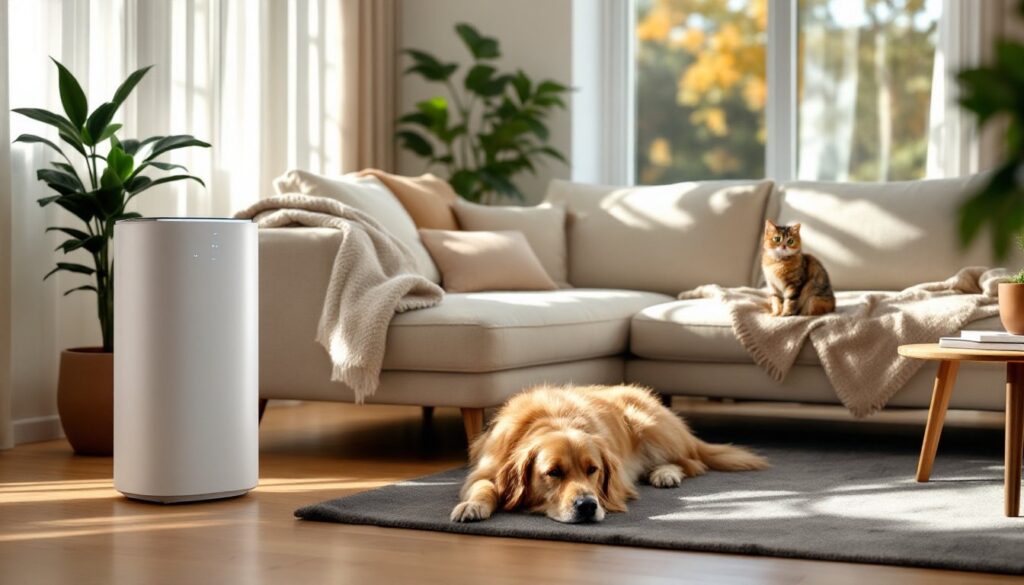
TogglePet owners know the drill: dander settles on every surface, litter box odors drift through hallways, and seasonal shedding turns the air hazy. A quality air purifier isn’t just about fresher air, it’s about reducing allergens that trigger sneezing fits and eliminating the smells that linger long after Fido’s bath day. But not all purifiers handle pet-specific challenges equally. Units designed for general dust won’t tackle the microscopic proteins in cat saliva or the volatile organic compounds (VOCs) from urine. This guide breaks down what makes a purifier pet-ready, which models deliver real results, and how to size and maintain them for homes with one dog or five cats.
Key Takeaways
- A specialized air purifier for homes with pets must combine True HEPA filtration and activated carbon to tackle both airborne dander and odors that standard purifiers cannot neutralize.
- Choose an air purifier sized for 20% more square footage than your room and aim for five air changes per hour (ACH) to effectively manage heavy shedding and pet-related allergens.
- The best air purifiers for pet owners like the Levoit Core 400S and Coway Airmega 300 deliver CADR ratings above 240 cfm and use substantial activated carbon layers (1+ pounds) to control persistent odors.
- Regular maintenance—vacuuming pre-filters every two to four weeks, replacing HEPA filters every 6–12 months, and swapping carbon filters every 3–6 months—is essential for sustained performance in multi-pet households.
- Position air purifiers in high-traffic pet zones like living rooms and near litter boxes rather than corners, and run them continuously to reduce airborne allergens by up to 60% when combined with regular cleaning.
Why Pet Owners Need a Specialized Air Purifier
Standard air purifiers target common household dust and pollen, but pets introduce particles and gases that require different filtration tech. Pet dander, microscopic flakes of skin, ranges from 2.5 to 10 microns and stays airborne for hours. Cat allergen (Fel d 1) is especially persistent, clinging to fabrics and recirculating through HVAC systems.
Odors add another layer. Litter boxes, wet dog fur, and accident spots release ammonia and sulfur compounds that basic filters can’t neutralize. A purifier without activated carbon will move air around but won’t break down these odor molecules. Pet households also deal with higher airborne bacteria from licked paws, outdoor dirt tracked inside, and saliva residue.
If anyone in the home has asthma or allergies, a pet-focused purifier is non-negotiable. The Asthma and Allergy Foundation of America notes that reducing airborne allergens can cut symptom severity by up to 60% when combined with regular cleaning. But the purifier has to run continuously and match the room’s square footage, intermittent use or undersized units won’t keep up with shedding cycles or multiple animals.
Essential Features to Look for in a Pet-Friendly Air Purifier
A pet-ready purifier needs three core components: a true HEPA filter, an activated carbon layer, and enough airflow to cycle the room’s air four to five times per hour. HEPA filters capture 99.97% of particles down to 0.3 microns, trapping dander, dust mites, and pollen. Look for units labeled “True HEPA” or “H13 HEPA”, marketing terms like “HEPA-type” usually mean lower efficiency.
Activated carbon handles odors by adsorbing gas molecules onto a porous surface. Cheap models use a thin carbon mesh: better units pack several pounds of pelletized or granular carbon. The thicker the carbon bed, the longer it controls smells before needing replacement. Some purifiers add a pre-filter to catch pet hair before it clogs the HEPA layer, extending filter life and reducing maintenance frequency.
CADR ratings (Clean Air Delivery Rate) tell you how fast the unit removes smoke, dust, and pollen, measured in cubic feet per minute. For a 300-square-foot room, aim for a CADR of at least 200 cfm. Pet owners should oversize slightly, if the room is 250 square feet, choose a purifier rated for 350 to handle heavy shedding periods.
Noise matters when the unit runs 24/7. Models with brushless DC motors and fan speeds below 50 decibels on medium settings won’t disrupt sleep or conference calls. Auto mode adjusts fan speed based on particle sensors, ramping up during high-activity times and dialing back at night.
HEPA Filters and Activated Carbon Technology
HEPA filtration originated in the 1940s for nuclear air safety and became the standard for medical and industrial clean rooms. The filter media, dense mats of randomly arranged fibers, catches particles through three mechanisms: interception (particles follow airflow into fibers), impaction (larger particles can’t navigate the fiber maze), and diffusion (tiny particles bounce erratically and stick to fibers).
Activated carbon starts as coconut shells, coal, or wood charcoal, then gets “activated” by heating it with steam or chemicals to create millions of microscopic pores. One gram of activated carbon can have a surface area of 500 to 1,500 square meters. When odor molecules pass through, they bond to the carbon surface in a process called adsorption (not absorption, the molecules stick to the surface rather than soaking in).
Combining these two technologies addresses the full spectrum of pet-related air quality issues. HEPA removes the solid particles: carbon neutralizes the gases. Units that skip carbon will leave you smelling phantom litter boxes even when particle counts drop. According to testing by home product engineers, dual-filter systems outperform single-stage models in both particle reduction and odor control across multiple pet types.
Top Air Purifiers for Homes with Pets
Levoit Core 400S handles rooms up to 403 square feet with a three-stage filter system: washable pre-filter, H13 True HEPA, and custom high-efficiency activated carbon. The pet-specific carbon variant uses 1.4 pounds of carbon pellets versus 0.5 pounds in the standard version. CADR ratings hit 260 cfm (dust), 240 cfm (pollen), and 190 cfm (smoke). Smart features include app control, air quality monitoring, and scheduling. Filter replacements run about $50 and last six to eight months in multi-pet homes. At 24 dB on sleep mode, it’s quieter than a whisper.
Coway Airmega 300 covers up to 1,256 square feet with dual filtration on each side of the unit, pulling air from both directions. The MAX2 filter combines HEPA and activated carbon in a single cartridge. CADR scores reach 350+ cfm across all particle types. Real-time air quality indicators change color, blue for good, purple for moderate, red for poor, and auto mode adjusts fan speed accordingly. Filters cost around $90 but last up to a year with average use. It’s bulkier than tower-style units (about 50 pounds), so plan for a permanent spot.
Winix 5500-2 offers budget-friendly performance for rooms up to 360 square feet. It includes a washable pre-filter, True HEPA, activated carbon, and PlasmaWave technology that breaks down odors and VOCs at a molecular level without producing ozone. CADR ratings sit at 246 cfm (dust) and 232 cfm (pollen). The auto mode is reactive, particle sensors kick the fan into high gear when it detects spikes from shaking fur or refilling litter. Replacement filters cost about $60 annually. Noise levels peak at 54 dB on turbo, manageable for daytime use.
Blueair Blue Pure 211+ prioritizes airflow over smart features, moving 350 cfm through a room up to 540 square feet. The combo filter wraps activated carbon granules inside pleated HEPA media, and a pre-filter fabric sleeve (available in multiple colors) catches hair and large debris. It’s a one-button design, no app, no sensors, just three manual fan speeds. Filters run about $70 and should be swapped every six months with pets. At 31 dB on low, it’s nearly silent, but high mode hits 56 dB. Energy use stays below 60 watts even on max.
Room Size and Coverage Considerations for Multi-Pet Households
Sizing an air purifier isn’t just about matching square footage, it’s about air changes per hour (ACH). For pet homes, target five ACH, meaning the unit cycles the entire room’s air five times every hour. Calculate room volume (length × width × ceiling height), then find a purifier whose CFM rating delivers that turnover rate.
Example: A 15′ × 20′ room with 8′ ceilings has 2,400 cubic feet of air. To achieve five ACH, you need 12,000 cubic feet per hour, or 200 cfm (12,000 ÷ 60 minutes). If your room has vaulted ceilings or you’re running the purifier in an open-concept space, bump up to a higher-capacity model.
Homes with multiple pets should consider placing purifiers in high-traffic zones, living rooms where pets lounge, bedrooms where dander accumulates overnight, and near litter boxes or pet beds. Running one underpowered unit in a central hallway won’t address odor hotspots. For whole-home coverage, either install multiple standalone units or integrate HEPA filtration into the HVAC system with a MERV 13 or higher filter and UV-C light for odor control. HVAC integration requires professional installation and may need duct modifications, but it provides seamless air cleaning without floor space sacrifices.
Open floor plans present challenges. If the kitchen, dining, and living areas share 900 square feet of uninterrupted space, treat it as a single zone and choose a purifier rated for at least 1,000 square feet. Alternatively, run two smaller units at opposite ends. According to guidance from home maintenance experts, strategically placed units outperform a single oversized model in complex layouts.
Maintenance Tips to Maximize Your Air Purifier’s Performance
Pre-filters should be vacuumed or rinsed every two to four weeks in pet households. Hair and large debris clog pre-filters fast, choking airflow and forcing the HEPA filter to work harder. Some models have washable foam or mesh pre-filters, rinse with warm water, air dry completely, and reinstall. Never reuse a wet filter: moisture breeds mold.
HEPA and carbon filters aren’t washable. Vacuuming them damages the delicate fiber structure and reduces efficiency. Replace HEPA filters every six to twelve months depending on pet count and shedding intensity. If you notice reduced airflow, increased noise, or persistent odors, swap filters early. Carbon layers saturate faster than HEPA, some units use separate carbon filters that need changing every three to six months. Check the manufacturer’s schedule and set phone reminders.
Wipe down the unit’s exterior and air intake vents monthly. Dust and pet hair collect on grilles and block airflow. A microfiber cloth or vacuum brush attachment takes care of buildup in seconds. If the unit has an ionizer or UV-C bulb, check the manual for cleaning or replacement intervals. UV bulbs lose effectiveness after 10,000 to 12,000 hours of use, even if they still light up.
Keep the purifier at least 12 inches away from walls and furniture to allow unrestricted air intake and exhaust. Placement in corners or behind sofas reduces efficiency by up to 30%. Avoid running the unit near humidifiers, excess moisture clogs filters faster. If you use a whole-house humidifier, monitor indoor humidity with a hygrometer and keep it between 30% and 50% to prevent mold growth on filters.
Safety note: Always unplug the unit before opening panels or swapping filters. Some models use high-voltage ionizers or UV-C lamps that pose shock or UV exposure risks if accessed while powered. Wear gloves when handling used filters, they’re loaded with allergens and bacteria. Dispose of filters in sealed plastic bags to prevent releasing trapped particles back into the air.
Conclusion
A pet-focused air purifier won’t replace vacuuming, grooming, or washing bedding, but it handles the airborne load that cleaning can’t touch. Prioritize true HEPA filtration, thick activated carbon layers, and units sized for 20% more coverage than your actual room dimensions. Run the purifier continuously, stay on top of filter swaps, and place units where pets spend the most time. The payoff is measurable, fewer allergy flare-ups, less odor, and air that doesn’t smell like a kennel between baths.